Best Cooking Competition Team Building in Singapore
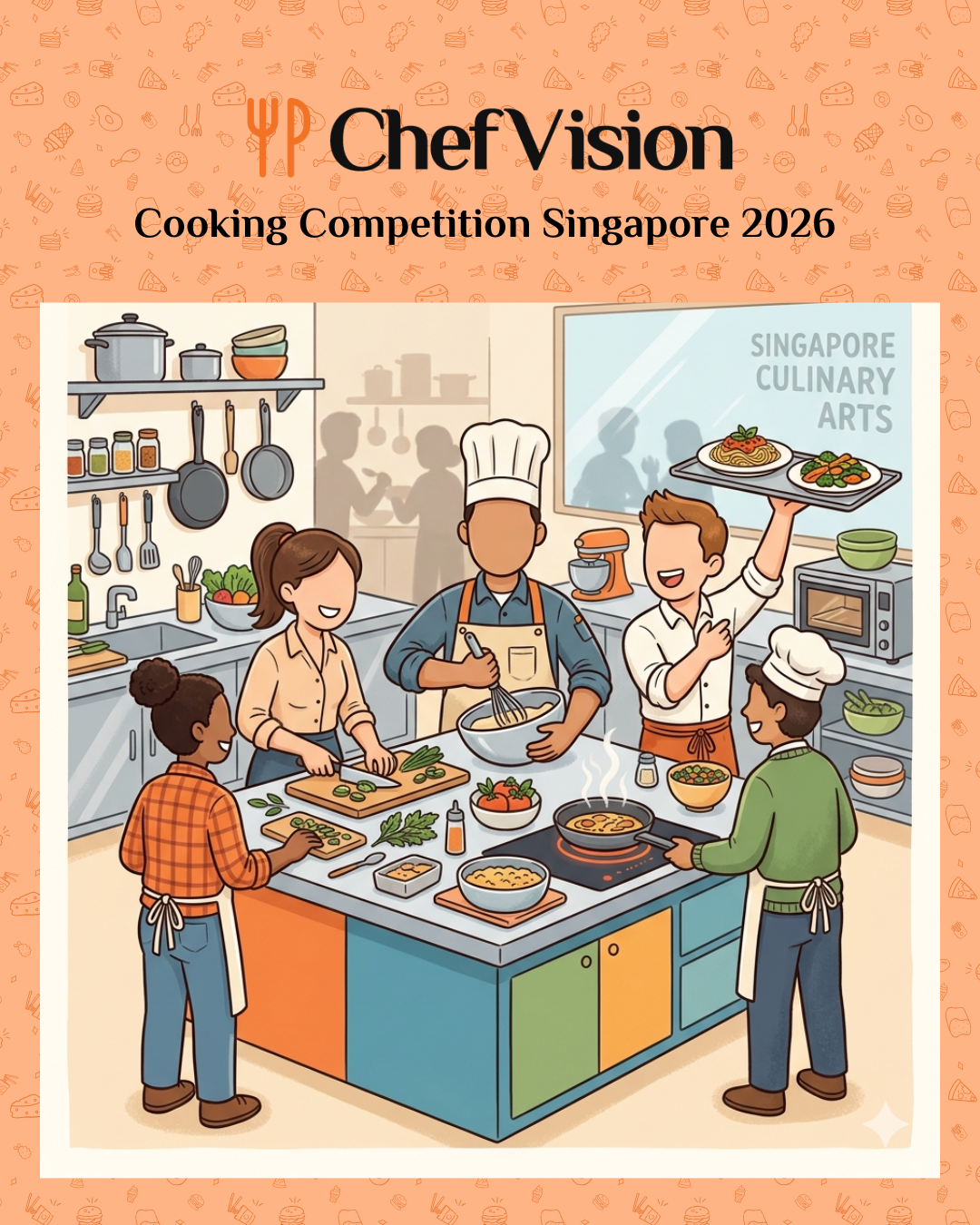
Looking for a dynamic cooking competition team building event in Singapore? These MasterChef-style culinary challenges pit corporate teams against each other in professional kitchens, testing communication, leadership, and crisis management under time pressure. Typically lasting 2 to 3 hours, these events accommodate diverse dietary needs, including MUIS Halal-certified options.
Why Choose a Cooking Competition for Corporate Team Building?
Operational Synergy is the practical alignment of diverse team members working simultaneously under shared resource constraints to execute a unified project strategy.
Traditional corporate workshops often relegate participants to passive listening roles. Cooking competition team building activities in Singapore break this pattern by dropping teams directly into a simulated high-stakes business environment. Stovetops, prep counters, and specialized utensils replace desks, project boards, and software tools.
When a team of corporate analysts or engineering leads steps into a professional kitchen, established office hierarchies disappear. The task of preparing a multi-course menu within ninety minutes exposes organizational silos immediately. Success requires rapid delegation, active listening, and instant conflict resolution. For instance, if one team member monopolizes the food processor while another waits to blend a crucial sauce, the delay directly impacts the final plate of presentation. This immediate cause-and-effect relationship mirrors office project management, teaching teams to optimize workflow bottlenecks in real time.
Culinary Class vs. MasterChef-Style Cooking Challenge
Choosing the right format depends on your specific event objectives. While standard cooking classes focus on individual skill acquisition, a competitive cook-off stresses group dynamics and collective resource management.
| Evaluation Metric | Traditional Culinary Class | MasterChef-Style Cooking Challenge |
| Primary Focus | Recipe execution and individual culinary skill | Strategy, delegation, and crisis management |
| Cognitive Load | Low (Step-by-step guidance provided) | High (Independent menu planning & timing) |
| Team Interaction | Low (Participants work on separate portions) | High (Shared resources and joint decision-making) |
| Resource Bottlenecks | Controlled by the resident chef | Managed entirely by the corporate team |
| Required Level of Trust | Minimal | High (Interdependent tasks determine success) |
The 2-Hour Corporate Cooking Challenge Timeline
Executing a successful corporate culinary event requires a tight operational blueprint. A typical two-hour challenge relies on structured phases to maximize engagement and ensure timely completion.
Phase 1: Briefing and Ingredient Reveal (Minutes 00–15)
The event begins with a quick safety orientation by professional kitchen facilitators. Teams receive assignments to their designated kitchen stations, followed by the reveal of the core mystery ingredients.
Phase 2: Strategy and Menu Planning (Minutes 15–30)
Teams have fifteen minutes to review available pantry staples and map out their menu strategy. This phase tests leadership and delegation, as groups must assign roles such as head chef, prep cooks, and plating designers before anyone touches an ingredient.
Phase 3: The Cook-Off and Crisis Management (Minutes 30–90)
Sixty minutes of active cooking follow. Facilitators often introduce unexpected operational shifts midway through such as sudden resource shortage or mandatory recipe modification. Teams must manage stove space, track cooking times, and maintain station cleanliness under pressure.
Phase 4: Presentation, Judging, and Evaluation (Minutes 90–120)
Each team presents their final dishes to a panel of culinary judges. Plates are evaluated on taste, presentation, resource utilization, and overall teamwork, culminating in an award ceremony and group dining experience.
Compliance & Logistics: Halal Options and SFA Rules in Singapore
Organizing corporate events in Singapore requires strict adherence to local food handling standards and religious dietary constraints.
MUIS Halal Certification involves a formal audit process by the Islamic Religious Council of Singapore confirming that a kitchen operates in strict accordance with Islamic dietary laws.
Singapore Food Agency (SFA) Regulations dictate the legal hygiene and safety standards for all food handlers and preparation spaces within the country.
When planning your cooking competition team building session, verify whether the venue holds a valid MUIS Halal certification or offers a "Muslim-friendly" setup. A certified kitchen ensures that all equipment, utensils, and ingredients are strictly separated and verified. If a studio uses a Muslim-friendly setup instead, confirm that they source ingredients from Halal-certified suppliers and use dedicated, unused cookware for your team members.
Additionally, corporate planners must check that the venue facilitators hold current SFA Food Safety Course Level 1 certificates. This guarantees that your team operates in a clean environment that meets local regulatory standards, preventing cross-contamination and ensuring proper food handling practices throughout the competition.
Average Cost Packages for Culinary Team Building in Singapore
According to internal vendor industry surveys from 2025, budget allocations for corporate cooking competitions in Singapore fall into distinct tiers based on location, venue size, and menu complexity.
- Tier 1: Boutique and Cafe Studios (SGD 90 – SGD 120 per pax)
- Best suited for small teams (10 to 25 participants).
- Typically located in suburban areas or shophouses outside the Central Business District (CBD).
- Menus center on simpler dishes like basic pasta making or local pastry bakes.
- Tier 2: Premium Commercial Kitchens (SGD 130 – SGD 180+ per pax)
- Designed for larger corporate divisions (30 to 100+ participants).
- Located within premium CBD hubs or accessible commercial districts.
- Includes high-end ingredients, professional chef-judges, and advanced MasterChef-style setups.
When evaluating quotes, always ask about potential hidden fees. Common additional expenses include alcohol corkage charges, kitchen rental extensions beyond the two-hour mark, and customized corporate merchandise like embroidered aprons or chef hats.
Read more about: Team Building Cooking Singapore
Cooking Class Singapore: Someone Else Cooking
Back to List