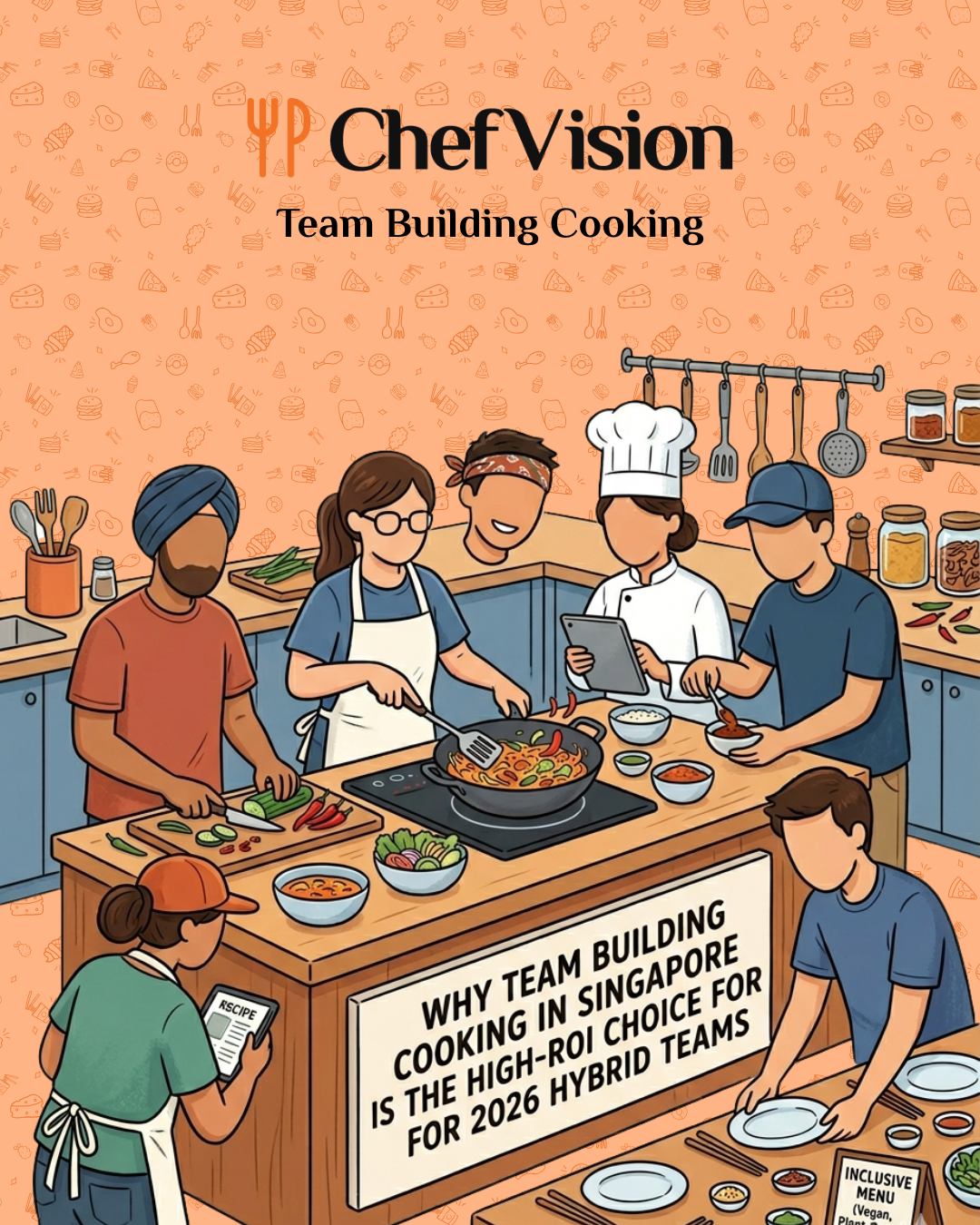
Why team building cooking in Singapore is the high-ROI choice for 2026 hybrid teams
Team building cooking in Singapore provides a high-ROI experiential learning environment where teams develop cross-functional collaboration and psychological safety. Ranging from SGD 80–180 per pax, these 3-hour sessions accommodate diverse dietary needs, including Halal-certified and plant-based options. They serve as an inclusive choice for Singapore’s 2026 hybrid workforce seeking to bridge departmental silos.
Beyond the kitchen: the strategic ROI of culinary workshops
Most corporate events in Singapore end when the final toast is made. However, data from MICE Industry Trends 2026 shows that 74% of local HR managers now prioritize "inclusive dining" and "skill transference" as the primary factors for event selection. The kitchen isn't just a place to make a meal; it is a high-pressure environment that mirrors the modern office.
When a marketing lead and a software engineer are tasked with perfecting a Beef Rendang, they aren't just following a recipe. They are practicing resource allocation and real-time problem-solving. In a hybrid work model where teams often suffer from "asynchronous communication gaps," the immediate feedback loop of a kitchen where a missed step results in a burnt sauce forces a level of direct coordination that Zoom calls cannot replicate.
Solving the inclusion puzzle: Halal, vegan, and neurodiverse-friendly events
Singapore’s corporate strength lies in its diversity, but this often creates logistical friction for event planners. A common pitfall is assuming "No Pork No Lard" is sufficient for religious compliance. It isn't.
MUIS Halal Certification is the gold standard for food safety and religious compliance in Singapore. It requires a dedicated Halal-only kitchen environment, separate utensils, and strictly audited supply chains. For a team to truly bond, every member must feel safe at the table. If a portion of your team is relegated to a separate "external caterer" box while others cook together, the "team building" element is compromised before it begins.
Beyond dietary needs, 2026 standards require attention to neurodiversity. Professional kitchens are loud, hot, and sensory-heavy. Leading providers now offer sensory-friendly zones or "low-heat" prep stations. This ensures that employees with sensory sensitivities can contribute to the team’s success without facing burnout. This "Inclusion Metric" is what separates a standard outi ng from a high-quality corporate investment.
The 5 most effective culinary challenges for corporate silos
To break down departmental barriers, the activity must require interdependence.
| Activity | Core Skill | Team Outcome |
| The Mystery Box Challenge | Rapid Decision-Making | Reduced decision paralysis under pressure |
| Heritage Laksa Relay | Role Delegation | Improved hand-over protocols between departments |
| Sustainable Sourcing Workshop | Resource Management | Alignment with corporate ESG goals |
| Plating & Presentation Race | Attention to Detail | Focus on "client-ready" final outputs |
| The "Kitchen Crisis" Simulation | Conflict Resolution | Stronger psychological safety after shared failure |
The mystery box challenge
This challenge forces teams to abandon "the way we’ve always done it." With limited ingredients and a ticking clock, participants have to identify natural leaders and delegators. One team in a 2025 Jurong-based tech firm found that their junior designers took the lead on "plating aesthetics" while the senior managers handled "logistics and heat management." This reversal of typical hierarchies often reveals hidden talents within a workforce.
Heritage Laksa and cultural intelligence (CQ)
In a multicultural hub like Singapore, cooking local staples like Laksa is an exercise in Cultural Intelligence. Understanding the origins of spices and the "Rempah" (spice paste) fosters a deeper appreciation for the heritage of colleagues. It moves the conversation beyond "work talk" and into shared identity.
Logistics and planning: what every Singapore HR manager needs to know
Planning a session for 10 people is a hobby; planning for 100 is a logistical operation. For groups exceeding 50 pax, look for studios in the Tanjong Pagar or Orchard areas that offer "split-bay" configurations.
Typical Specs for 2026 Events:
- Lead Time: 4–6 weeks for Halal-certified venues; 2 weeks for standard studios.
- Duration: 3 hours (90 mins cooking, 60 mins dining, 30 mins debrief).
- Cost per Pax: SGD 80 (Basic) to SGD 210 (Premium Seafood/Wine Pairing).
- Mobile Options: Some providers bring "induction-only" setups directly to your office breakout rooms, reducing transport time and costs.
Psychological safety in high-heat environments
Culinary Psychological Safety is the team-wide belief that taking risks in the kitchen like experimental seasoning will not result in social punishment.
The most successful teams are not those that produce a "perfect" dish every time. They are the ones that can pivot when a mistake happens. If a sauce is oversalted, does the team hide the error, or do they collaborate on a fix?
In our experience with over 200 corporate groups, the "failed" dishes often lead to the most productive office debriefs. The kitchen provides a low-stakes environment to practice the vulnerability required for high-stakes innovation. When a director and an intern both fail to flip a prata correctly, the power distance evaporates, paving the way for more honest communication in the boardroom.
Frequently asked questions
What is the average cost per pax for team building cooking in Singapore? In 2026, expect to pay between SGD 95 and SGD 150 for a comprehensive package that includes ingredients, chef instruction, and a full sit-down meal. Premium options involving imported wagyu will lean toward SGD 200+.
How do you handle severe allergies in a communal kitchen? Reputable providers conduct a pre-event survey to identify Celiac, nut, or shellfish allergies. These participants are often given a "Safe Zone" station with dedicated equipment to prevent cross-contamination while remaining part of the team's workflow.
Is it possible to host a cooking event at our own office? Yes. Mobile culinary providers use portable induction hobs and pre-prepped ingredients. This is a popular option for firms in the CBD looking to maximize "on-the-clock" time while still providing an experiential break.
What is the difference between Halal-certified and Muslim-friendly kitchens? A "Muslim-friendly" kitchen generally avoids pork and alcohol but may not be MUIS-audited. A Halal-certified kitchen has undergone rigorous inspection by the Majlis Ugama Islam Singapura, ensuring the entire supply chain and preparation process meet religious standards.
What is the ideal duration for a corporate cooking session? Three hours is the industry standard. This allows for a 15-minute briefing, 75 minutes of active cooking, and a full hour to enjoy the meal and conduct a facilitated team of debrief.
Read more about: How Much Does a Private Chef Cost in Singapore? (2026 SGD Breakdown)
Back to List