Master Guide to Gluten-Free Catering in Singapore: Cross-Contamination Risks, Vetting Protocols, and ChefVision’s Menus
Gluten free catering in singapore provides complete, safe, and curated dining experiences for corporate events, weddings, and private gatherings by implementing strict kitchen isolation protocols and using dedicated gluten-free preparation tools. For diners managing celiac disease or severe gluten sensitivity, securing reliable catering requires knowing exact kitchen cross-contamination risks and verifying caterer practices beforehand.
What is gluten-free catering in Singapore?
Gluten-free catering in Singapore delivers complete food service for events, meetings, and parties, prepared without wheat, barley, rye, or contaminated oats. It combines traditional local or international dishes adapted for dietary safety, utilizing dedicated prep areas, isolated fryers, and tested ingredients to protect guests with celiac disease or gluten intolerance.
The difference between wheat-free and gluten-free
A common misunderstanding in local dining is conflating wheat-free items with gluten-free items. Wheat is just one cereal grain that contains gluten. Rye, barley, spelt, kamut, and non-certified oats also contain gluten proteins (gliadin and glutenin) that trigger immune responses in people with celiac disease.
If a caterer replaces wheat flour with barley malt syrup, rye flour, or standard soy sauce made with wheat fermented alongside soybeans, the dish remains unsafe. True gluten-free catering evaluates every single ingredient, binder, sauce, and thickener across the supply chain.
Why cross-contamination is the central risk in catering setup
When serving a buffet or plated meal for fifty or five hundred people, cross-contamination poses a greater threat than the intentional inclusion of wheat flour. Trace amounts as small as 20 parts per million (ppm), the threshold used in FDA and Codex Alimentarius gluten-free labeling standards, are considered too small to see or taste yet can still trigger intestinal inflammation, systemic symptoms, and long-term autoimmune reactions in someone with celiac disease.
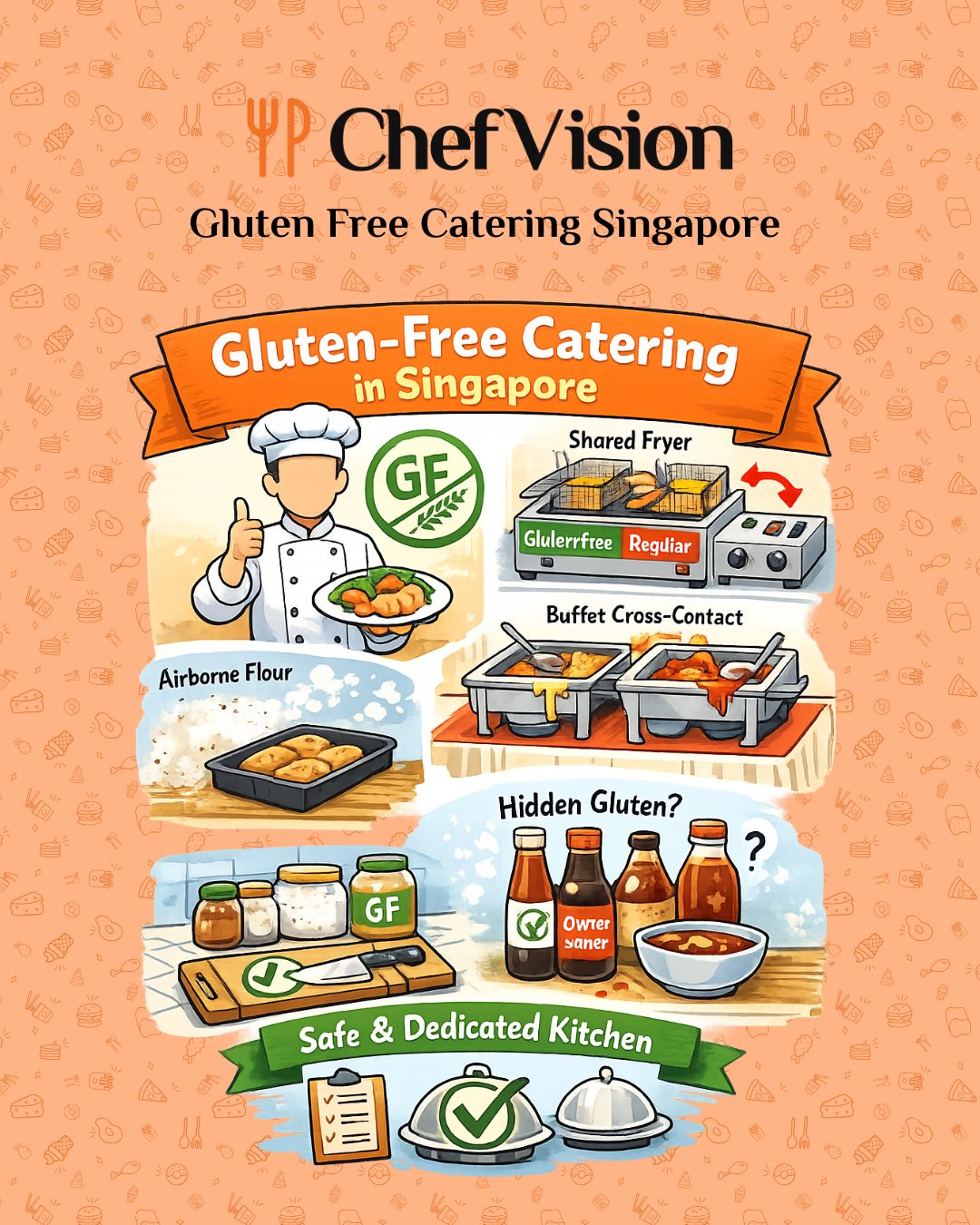
Airborne flour dust in central kitchens
Flour dust remains suspended in the air for up to 24 hours after baking or breading operations finish. If a central production kitchen bakes standard bread rolls in the morning and prepares gluten-free meal boxes in the same space that afternoon, airborne particles settle on countertops, open sauce pans, and packaging materials.
Shared oil fryers
Frying gluten-free chicken wings or potato wedges in oil previously used for breaded items like chicken cutlets, samosas, or spring rolls instantly contaminates the oil with microscopic gluten debris. Heat does not break down gluten proteins. Fryers used for gluten-free items must be thoroughly cleaned and dedicated solely to gluten-free frying.
Buffet line cross-contact
At live catering events, cross-contamination often occurs right at the buffet table:
Serving Utensil Drift: A guest uses the gluten-free rice spoon to scoop a gluten-containing pasta dish, then places the spoon back in the rice tray.
Drip and Spill Overlap: Trays positioned side-by-side allow sauces containing flour-thickened gravies to drip into neighboring salad or protein trays.
Steam Condensation: Condensation running off the lids of chafing dishes containing breaded foods can drip into adjacent gluten-free warmers if placed too closely together.
Key questions to ask a caterer before booking
Do not rely solely on a "GF" icon on a PDF menu. Asking direct, operational questions helps verify whether a catering company understands cross-contamination protocols.
1. "Do you prepare gluten-free items on dedicated surfaces with separate utensils?"
A trained caterer will explain their physical segregation procedures, such as color-coded cutting boards, separate cookware, or dedicated prep shifts scheduled after complete sanitation cycles.
2. "Are fried menu items cooked in dedicated gluten-free fryers?"
If the caterer mentions using a single fryer for both breaded appetizers and gluten-free items, skip fried items entirely or request alternative preparation methods like baking or roasting.
3. "What specific brands of soy sauce, oyster sauce, and stock bases do you use?"
Traditional Asian condiments are primary sources of hidden gluten:
Standard Commercial Soy Sauce: Made with roasted wheat grains. Must be replaced with tamari or gluten-free certified soy sauce.
Oyster and Hoisin Sauces: Frequently thickened with wheat flour or modified wheat starch.
Bouillon Powders and Stocks: Often contain wheat-derived maltodextrin or hydrolyzed wheat protein.
4. "How do you protect gluten-free dishes on the buffet line?"
Look for caterers that offer separate plated service, distinct service stations placed away from main buffets, or individually sealed meal boxes for guests with severe sensitivities.
Hidden sources of gluten in local Singaporean cuisine
Navigating local catering menus requires recognizing traditional dishes that rely on wheat-based binders, thickeners, and marinades
Local sauces and marinades
Standard kecap manis (sweet soy sauce), light soy sauce, and dark soy sauce form the base of many local glazes, braises, and dipping sauces. Without explicit substitution using gluten-free tamari or certified wheat-free kecap manis, braised meats, chicken rice chili glazes, and stir-fry bases remain unsafe.
Binders in meat and seafood pastes
Processed items such as fishcakes, fishballs, otah, and ngoh hiang traditionally use wheat flour or wheat starch as binding agents to achieve their characteristic springy texture (Q-texture). Gluten-free versions require pure fish paste, tapioca starch, or cornstarch as alternative binders.
Thickened gravies and sambals
Commercial sambal pastes and curry bases often use wheat flour for body and shelf stability. Thick gravies served over braised meats, rendang, or black pepper dishes should be thickened with cornstarch, tapioca starch, or arrowroot instead of roux.
ChefVision’s approach to gluten-free catering in Singapore
ChefVision provides complete catering services designed around strict allergen safety, dietary inclusions, and balanced menu planning. By redesigning central kitchen workflows and sourcing certified ingredients, corporate and private events can host inclusive meals without compromising on flavor or presentation.
Dedicated prep protocols and certified sourcing
ChefVision schedules gluten-free production during isolated shifts following full kitchen deep-cleaning cycles. Tools, cutting boards, mixing bowls, and cookware used for these orders are kept in dedicated storage.
Key operational measures include:
100% Tamari & GF Soy Substitution: All soy-based marinades, glazes, and dipping sauces across our gluten-free lines use certified wheat-free tamari.
Dedicated Frying Lines: Fryers used for gluten-free options are kept completely free of wheat-breaded items.
Scratch-Made Pastes: Sambals, rempehs, laksa bases, and curry pastes are made in-house using fresh aromatics, herbs, and gluten-free thickeners.
ChefVision gluten-free menu options
From high-profile corporate luncheons to intimate family celebrations, ChefVision offers structured menu selections across multiple serving formats.
Executive Bento Boxes (Individual Service)
To completely prevent buffet line cross-contamination, individual bento boxes are sealed at our central facility and delivered directly to your guests.
Singapore Heritage Set: Fragrant jasmine rice cooked in fresh coconut milk and pandan, served with lemongrass-braised beef rendang, turmeric-baked chicken, house-made gluten-free sambal, and stir-fried long beans with dried shrimp.
Mediterranean Herb Set: Quinoa pilaf with roasted pine nuts, lemon-thyme grilled chicken breast, char-grilled zucchini and capsicum, served with house-made tahini cucumber tzatziki.
Pan-Asian Salmon Set: Pan-seared Atlantic salmon glazed with a sweet gluten-free tamari reduction, served over wild rice pilaf and wok-tossed baby bok choy.
Live Station & Plated Experiences
For events requiring interactive food stations, ChefVision deploys dedicated live stations staffed by chefs trained in allergen control.
Gluten-Free Laksa Station: Thick rice vermicelli served in a rich, coconut-based broth prepared entirely from scratch without wheat thickeners. Toppings include fresh prawns, fishcake made with 100% pure fish paste, hard-boiled eggs, and fresh laksa leaves.
Carving & Roast Station: Slow-roasted Australian ribeye with fresh rosemary and garlic, served alongside roasted baby potatoes, buttered baby carrots, and a rich jus thickened with cornstarch.
Step-by-step checklist for planning a gluten-free event
Proper organization ensures that guests with dietary requirements receive safe, well-coordinated meals without service delays.
Step 1: Collect dietary requirements early
Include a specific dietary field on RSVP forms. Ask guests to distinguish between lifestyle preferences, gluten sensitivity, and diagnosed celiac disease so the catering team can prepare appropriate safety measures.
Step 2: Choose the right service format
For high-density events with limited space, choose individually sealed bento boxes for dietary guests. For formal dinners, choose a fully plated service or a distinct, separate buffet table for gluten-free options.
Step 3: Establish physical separation at the venue
When hosting a mixed buffet, position the gluten-free section at the beginning of the line or on an entirely separate table. Provide color-coded serving tongs and place clear allergen labels on every dish.
Frequently Asked Questions
Can you cater for celiac disease safely in a mixed buffet setting?
While we offer gluten-free options on mixed buffets, we strongly recommend individually sealed bento boxes or a physically separate, dedicated table for guests with celiac disease. This eliminates the risk of guests inadvertently swapping serving utensils across dishes.
Are rice noodles and rice vermicelli always gluten-free?
Pure rice noodles, bee hoon (rice vermicelli), and kway teow made solely from rice flour and water are naturally gluten-free. However, some commercial manufacturers blend wheat starch into noodles to alter texture, or process them on machinery shared with wheat noodles. ChefVision sources verified, single-ingredient rice noodles for all gluten-free menu items.
How far in advance should I book gluten-free catering in Singapore?
We recommend booking at least 7 to 10 working days before your event date. This allows our culinary team to secure certified gluten-free ingredients, schedule dedicated preparation shifts, and finalize safe logistical handling for your order.
Does gluten-free catering cost significantly more?
Gluten-free catering requires specialized ingredients—such as premium tamari, gluten-free starches, and certified grain alternatives—alongside isolated preparation schedules. While individual dish prices may reflect these sourcing costs, ChefVision offers balanced package structures designed to keep inclusive catering practical for corporate and private budgets.
Can ChefVision accommodate multiple allergies alongside gluten-free requests?
Yes. Our kitchen team regularly prepares meals that combine gluten-free requirements with dairy-free, nut-free, vegetarian, or egg-free needs. Outline all specific allergen requirements during your initial consultation so we can design a suitable menu.
Plan your inclusive event with ChefVision
Providing safe, high-quality food for every guest does not mean compromising on menu variety or regional flavor. Whether you need executive bento boxes for a corporate seminar or a customized menu for a private celebration, ChefVision’s dietary catering team is ready to assist.
Ready to curate a safe and memorable dining experience for your guests?
Read more about: Keto Catering 2026