Healthy Meal Catering Singapore: 2026 Selection Guide & Menus
Choosing healthy meal catering in Singapore requires evaluating dietary certification, nutrient balance, and transparent sourcing. Top-tier providers like ChefVision offer nutritionist-approved corporate and private catering featuring precise macro counts, low-sodium prep, and locally sourced ingredients. Expect transparent tier pricing averaging $15 to $35 per pax for healthy event setups.
Executive Summary: Healthy Catering Standards in Singapore
Singapore's catering landscape shifted rapidly following updated Health Promotion Board (HPB) workplace dietary guidelines and stricter corporate wellness mandates. Modern diners no longer settle for standard buffet spreads heavy on refined carbohydrates and sodium. Whether planning an office event, a corporate retreat, or a family celebration, selecting the right partner means balancing culinary quality, macro accuracy, and strict safety compliance.
This guide outlines clear standards for evaluating food providers, breaks down nutritional selection frameworks, compares catering formats across Singapore, and highlights how specialized caterers like ChefVision structure balanced, chef-driven menus.
Critical Criteria for Evaluating Healthy Meal Catering Providers
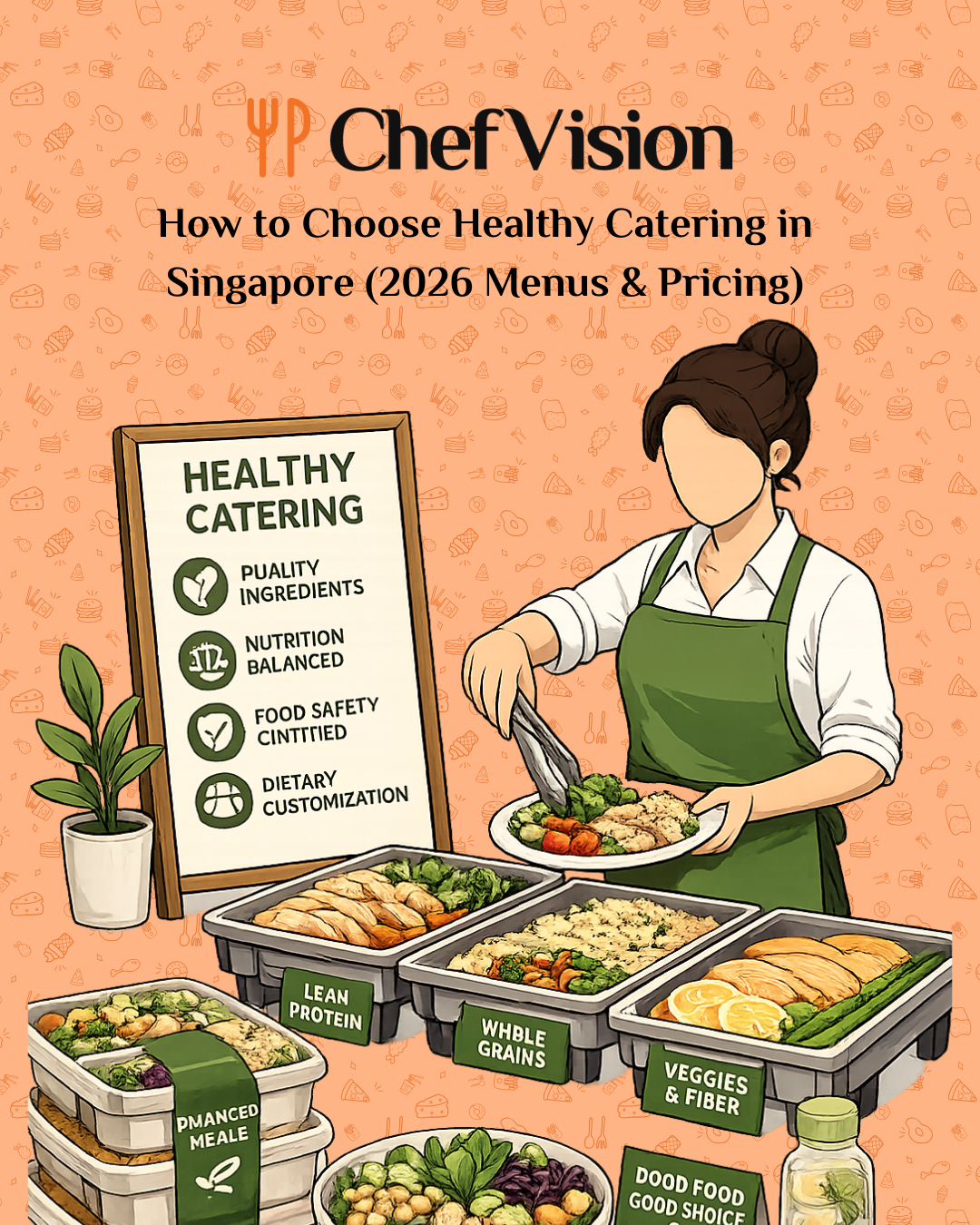
Selecting a healthy catering provider in Singapore involves looking past marketing labels like "organic" or "guilt-free." Evaluating a caterer's operational and nutritional capabilities requires examining four primary operational standards.
1. Ingredient Sourcing and Oil Quality
The foundation of healthy catering lies in raw ingredients. Standard catering operations often rely on high-yield vegetable oils, heavy starch thickeners, and excessive salt to preserve food texture over extended holding times.
Oil Selection: Quality health caterers replace refined palm olein with heart-healthy alternatives like extra virgin olive oil, cold-pressed canola oil, or avocado oil for high-heat preparations.
Sodium Management: Instead of relying on monosodium glutamate (MSG) or high-sodium premade pastes, healthy caterers build depth of flavor using fresh aromatics, herbs, long-simmered stocks, and fermented umami bases.
Traceability: Leading providers partner directly with regional farms and certified importers, securing farm-to-table greens and antibiotic-free proteins.
2. Macronutrient Balance and Portion Control
A common failure in bulk catering is an over-indexing on cheap carbohydrates like fried rice or refined noodles. Healthy meal catering mandates precise balance guided by nutritional frameworks such as the Health Promotion Board's "My Healthy Plate."
Complex Carbohydrates: Meals feature low-glycemic options including brown rice, quinoa, purple sweet potatoes, and whole-grain noodles.
Lean Protein Allocation: Servings are calculated to provide 25g to 35g of complete protein per individual pax, sourcing from wild-caught seafood, skinless poultry, grass-fed meats, or plant proteins like tempeh and tofu.
Fiber Density: Non-starchy vegetables constitute at least 30% to 40% of the total display volume, cooked using methods like steaming, flash-searing, or roasting to preserve nutrient retention.
According to Singapore's National Nutrition Survey, roughly 9 in 10 Singaporeans exceed recommended daily sodium intake levels, primarily from out-of-home dining. Choosing an HPB-compliant health caterer is one practical way to reduce that exposure, since these providers actively cap sodium in recipe design rather than adding it by default.
3. Kitchen Certifications and Food Safety
In Singapore's climate, food safety standards during transport and setup are non-negotiable.
SFA Licensing: Verify that the provider operates out of a Singapore Food Agency (SFA) licensed central kitchen with an A or B food hygiene grade.
Halal Certification: For inclusive corporate catering, check for MUIS Halal certification or dedicated no-pork, no-lard kitchen partitions.
Temperature Control: Hot food displays must maintain temperature above 60°C using safe heating apparatus, while cold setups require insulated transport under 4°C.
4. Dietary Customization Capabilities
A capable healthy caterer must accommodate diverse dietary needs without compromising menu coherence. Look for providers with dedicated handling procedures for:
Gluten-free and dairy-free requirements
Diabetic-friendly low-GI menu setups
Vegetarian, vegan, and plant-forward preferences
Keto and high-protein performance plans
Evaluating Healthy Catering Service Formats
Healthy meal catering in Singapore generally falls into three primary operational formats. Selecting the correct format depends on venue restrictions, event duration, and group size.
Catering Format | Best Used For | Key Advantages | Typical Price Range (SGD/pax) |
Bento Meal Boxes | Seminars, quick lunch meetings, outdoor events | Precise portion control, zero cross-contamination, rapid distribution | $12.50 – $22.00 |
Mini Buffets (Drop-off) | Small gatherings (10–20 pax), home parties, casual team lunches | Self-contained, no setup crew required, space-efficient disposable packaging | $18.00 – $28.00 |
Full Setup Buffets | Corporate galas, full-day conferences, weddings | Elegant presentation, live carving stations, warmer equipment | $25.00 – $55.00+ |
Strategic Sourcing: ChefVision's Health-Conscious Menus
ChefVision Catering is a Singapore-based culinary provider specializing in chef-crafted, health-focused menu designs. The company integrates sports nutrition principles with gourmet techniques to deliver precise, low-sodium, macro-balanced catering for corporate and private events.
ChefVision addresses the common complaint that healthy catered food tastes bland. By combining modern culinary technology with nutritionist oversight, ChefVision's catering options maintain structural integrity, vibrant colors, and deep flavor profiles throughout event durations.
ChefVision Signature Menu Highlights
1. Executive Wellness Bento Spread
Designed for corporate board meetings and multi-day workshops where sustained energy and focus are critical.
Protein Choice: Herb-crusted sous-vide chicken breast or pan-seared wild salmon fillet.
Carbohydrate Base: Organic quinoa tossed with toasted pumpkin seeds and baby spinach.
Vegetable & Fiber: Steamed broccolini, roasted tri-color bell peppers, and blanched asparagus.
Dressing/Sauce: Homemade lemon-tarragon vinaigrette (served on the side).
Nutritional Stats: ~520 kcal | 42g Protein | 48g Carbs | 18g Healthy Fats.
2. Gourmet Mediterranean Mini Buffet
Ideal for team celebrations and private home gatherings seeking a vibrant, heart-healthy spread.
Appetizer: Greek cucumber salad with heirloom tomatoes, Kalamata olives, and light feta.
Main 1: Grilled Mediterranean seabass with chermoula herb drizzle.
Main 2: Garlic and rosemary slow-roasted turkey breast.
Sides: Roasted Mediterranean root vegetables and saffron-infused brown basmati rice.
Guilt-Free Dessert: Chia seed pudding with fresh berries and crushed pistachios.
3. High-Protein Performance Buffet
Custom-built for athletic teams, fitness brand launches, or high-energy corporate retreats.
Live Station: Carving station featuring grass-fed sirloin roast beef with red wine jus.
Secondary Mains: Lemon-thyme grilled chicken thighs and baked tempeh skewers.
Sides: Sweet potato mash (dairy-free), charred kale, and sautéed edamame.
National Day & August Special Event Catering Considerations
August is a peak month for catering in Singapore, driven by National Day celebrations, corporate appreciation events, and mid-year gatherings. Ordering healthy catering during this period requires specific planning.
1. Healthy Adaptations of Local Favorites
August events often request traditional Singaporean dishes. ChefVision reimagines classic local comfort foods into healthier, HPB-friendly variations for National Day celebrations:
Healthy Rendang: Slow-cooked lean beef shanks using fresh coconut milk alternatives and reduced coconut oil, pairing rich spice pastes with complex carbs.
Hainanese Chicken Spread: Poached chicken served over fragrant garlic-ginger brown rice, accompanied by low-sodium chili sauce and fresh cucumber ribbons.
LAKSA Reimagined: Whole-wheat vermicelli in a light, herbs-infused broth coconut soup base topped with tiger prawns, tau pok, and boiled eggs.
2. Hydration and Sugar Management for Outdoor Events
Singapore's August humidity calls for thoughtful beverage planning. Traditional catering often defaults to sugary fruit punches or canned sodas.
Infused Water Stations: Set up self-serve dispensers with cucumber-mint, berry-basil, or citrus-rosemary infusions.
Unsweetened Tea Options: Serve chilled cold-brew oolong, jasmine green tea, or lemongrass-pandan infusions.
Nutri-Grade Compliance: Ensure all provided drinks carry Nutri-Grade A or B labels to meet corporate health guidelines.
Step-by-Step Guide: How to Order Healthy Catering with ChefVision
Define Event Metrics: Establish total headcount, event location, time format (breakfast, lunch, tea break, dinner), and budget per pax.
Gather Dietary Requirements: Collect guest dietary profiles, noting allergies, Halal needs, vegetarian/vegan preferences, and specific medical restrictions.
Select Catering Format: Choose between individually packed bentos for quick distribution or a mini/full buffet for social gatherings.
Customize Macro Ratios: Coordinate with ChefVision's team to adjust protein-to-carbohydrate balances depending on your event demographic.
Confirm Logistics and Timings: Schedule delivery 30 to 45 minutes before serving time to ensure proper setup and temperature checks.
For corporate wellness planners seeking guidance on constructing complete workplace dietary strategies, reviewing the official Health Promotion Board Workplace Health Resources offers valuable baseline benchmarks.
Frequently Asked Questions (FAQ)
What defines healthy meal catering in Singapore?
Healthy meal catering focuses on balanced macronutrients, controlled sodium levels, and clean cooking techniques. Unlike standard catering, healthy providers use heart-healthy oils, complex carbohydrates, lean proteins, and fresh whole foods while avoiding added MSG, artificial additives, and excessive refined sugars.
How far in advance should I book healthy catering for August events?
Due to peak demand around National Day celebrations in August, book corporate and private catering at least 2 to 3 weeks in advance. This guarantees menu customization, preferred delivery slots, and adequate sourcing of fresh ingredients.
Can healthy catering accommodate strict dietary restrictions like keto or gluten-free?
Yes, look for a caterer that prepares restricted-diet dishes in a separate prep zone, not just a swapped ingredient on the same line, since cross-contamination is the real risk with strict allergies or keto compliance.
What is the average cost per pax for healthy meal catering in Singapore?
Expect somewhere between $15 and $35 per pax on average, with the format you choose (bento, buffet, or full setup) doing more to move that number than the specific dishes on the menu.
How does ChefVision ensure food remains fresh during event setups?
Ask the caterer directly about their transport window: the gap between when food leaves the kitchen and when it's served is where freshness is usually won or lost, more than any single piece of equipment.
Read more about: Private Dining Singapore: Restaurant-Quality Experience in Your Home