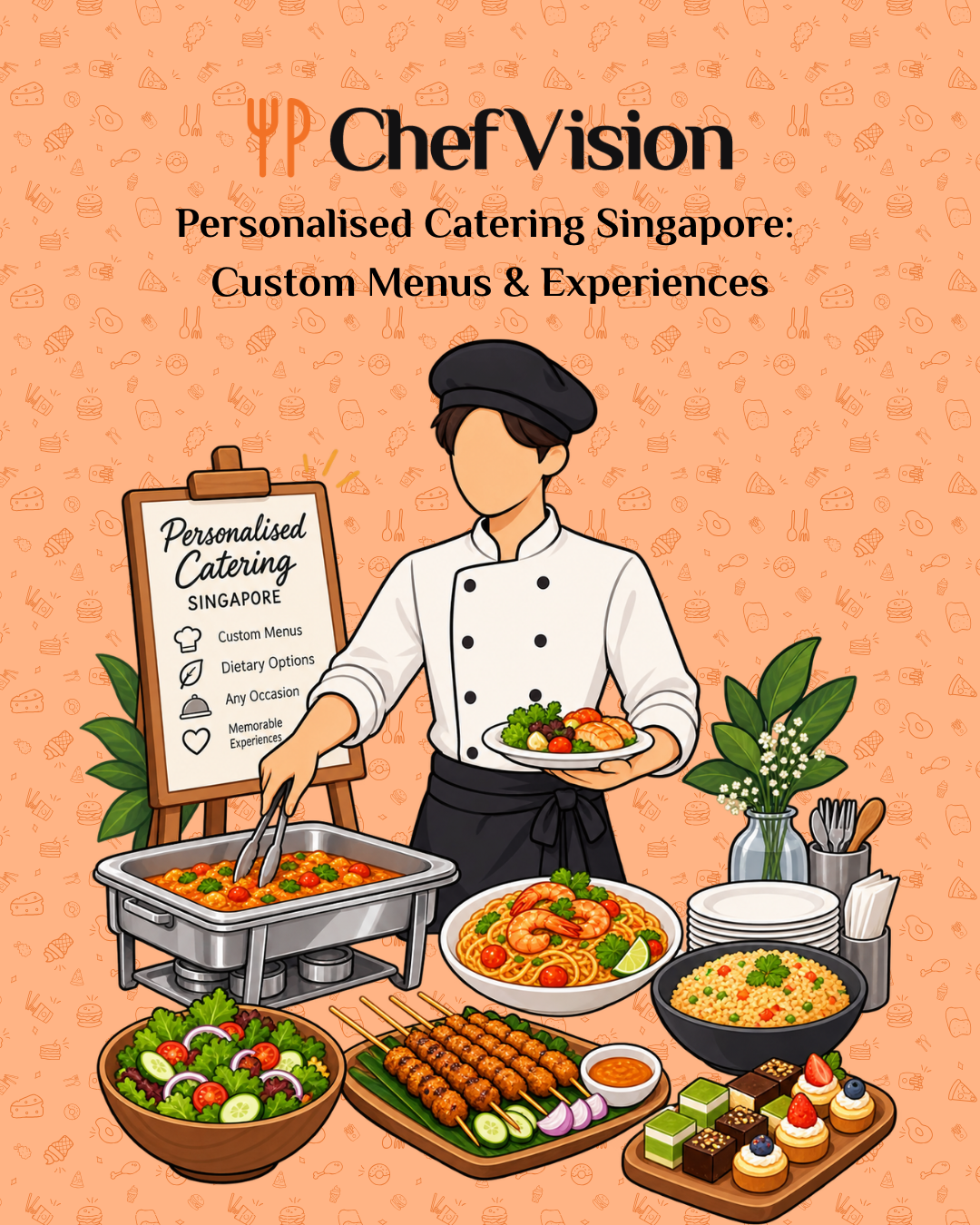
Personalised Catering Singapore: What It Really Means
When people think about catering in Singapore, the traditional buffet often comes to mind: several dishes arranged on a long table, guests serving themselves, and a menu designed to suit a broad audience.
That format still has its place. But catering is changing.
Today, hosts are increasingly looking for food experiences that feel more intentional. Instead of simply asking, “How many people are we feeding?”, they are asking:
What should our guests remember about this meal?
That is where personalised catering in Singapore comes in.
Personalised catering is the process of adapting to the food, menu, presentation, service style, and sometimes the entire dining concept around a particular event, host, group of guests, or occasion.
It can mean creating a menu around a family's heritage, incorporating favourite hawker dishes into a private event, designing food around a company's brand, accommodating different dietary requirements, or bringing a chef-led experience directly to a private venue.
The level of personalisation can be as simple as selecting dishes from different cuisines or as extensive as developing a completely bespoke dining experience.
This matters particularly in Singapore, where food is closely connected to culture, identity and social gatherings. Guests may have very different preferences, dietary requirements, and expectations at the same table.
A personalised approach gives hosts greater control over the experience while helping diners feel that the menu was created with them in mind.
Why Personalised Catering Is Becoming More Popular in Singapore
Singapore's catering landscape is moving beyond the idea that catering simply means preparing large quantities of food.
Recent industry coverage shows growing interest in experience-led catering, including live food stations and chef-prepared food. Live food stations alongside traditional buffets have become a visible trend in Singapore's catering scene, with several catering businesses noting rising interest despite the added cost of running them.
That shift reflects a broader change in expectations.
People still want convenience, but they also want experience.
A personalised catering service can help bridge the two.
1. Guests Have More Diverse Preferences
A Singapore gathering might include guests who prefer Chinese cuisine, Indian food, Malay flavours, Western dishes or fusion menus.
There may also be guests who require halal food, vegetarian options, or specific allergen considerations.
A standard menu can struggle to satisfy everyone.
Personalised catering allows the host and caterer to discuss these requirements before the event and build a menu that makes sense for the actual guest list.
2. Events Are Becoming More Experienced Driven
Food is increasingly part of the event itself rather than something happening in the background.
For example, a chef preparing laksa, satay or another familiar Singaporean dish live can become an interactive part of a celebration.
It gives guests something to watch, discuss, and participate in.
3. Hosts Want Events to Feel Less Generic
A birthday celebration, company dinner and family reunion should not necessarily have the same menu.
Personalisation allows food to reflect the occasion.
A corporate launch may benefit from elegant canapés and interactive stations. A family celebration might call for nostalgic dishes. A private dinner could involve a multi-course menu created specifically for the guests.
4. Singapore's Food Culture Encourages Personalisation
Singapore's food culture is incredibly diverse.
From hawker classics to Peranakan dishes, Indian cuisine, Malay specialities, Chinese regional cooking and contemporary fusion, there is no shortage of culinary inspiration.
This makes Singapore particularly suited to bespoke catering.
Instead of choosing a generic “Asian menu”, a host can work with a caterer or chef to create something more specific and meaningful.
What Is Included in Personalised Catering?
“Personalised catering” does not have one fixed definition.
The amount of customisation depends on the caterer, event, and budget.
Some services offer menu customisation, while others can build an entire dining concept around the client.
Here are some of the most common areas that can be personalised.
Custom Menu Selection
The most straightforward form of personalisation is choosing or modifying the menu.
For example, a host might want:
More local Singaporean dishes
A combination of Chinese and Western food
Vegetarian-friendly selections
Halal-friendly options
Less spicy dishes
Health-conscious alternatives
Premium ingredients for a special occasion
Childhood or family favourites
Modern interpretations of hawker classics
The objective is not simply to offer more choices.
It is to offer the right choices for the people attending.
Bespoke Menu Creation
At a higher level, a chef can create dishes specifically for an event.
This could involve discussing the host's preferences, event theme, cultural background, favourite ingredients, and desired dining style before developing the menu.
For private dining, this can turn a meal into a more intimate culinary experience.
Dietary Personalisation
Dietary requirements should be discussed earlier rather than treated as an afterthought.
Depending on the caterer and the event, requirements may include vegetarian meals, halal options, food allergies or other dietary restrictions.
Hosts should communicate these requirements clearly and ask the caterer how they manage preparation and cross-contact risks.
For catered events, food safety is particularly important. Engaging a licensed food caterer and checking their hygiene track record is a standard precaution when ordering food for functions and events in Singapore.
Service Style
Personalisation is not limited to food.
The way food is served can change the atmosphere of an event.
Possible formats include:
Buffet catering
Mini buffet
Bento-style meals
Plated dining
Family-style dining
Canapés
Cocktail reception
Live food stations
Chef-attended stations
Private chef dining
The right format depends on the venue, number of guests, event schedule, and desired atmosphere.
Personalised Catering for Different Singapore Events
One of the biggest advantages of personalised catering is flexibility.
The same approach can be adapted to different occasions.
Corporate Events
Corporate catering has traditionally focused on convenience: breakfast meetings, working lunches, seminars, and office buffets.
But companies are increasingly using food as part of the overall event experience.
For a product launch, personalised catering could incorporate brand-inspired presentations or interactive food stations.
For a networking event, bite-sized food can encourage guests to move around and interact.
For an employee appreciation event, the menu could feature comfort food, local favourites or dishes selected around the team's preferences.
The goal is to make the food appropriate for the event rather than simply filling out a catering package.
Private Celebrations
Birthdays, anniversaries, engagements, and family gatherings can all benefit from a personalised menu.
A birthday dinner, for example, could be built around the celebrant's favourite cuisine.
An anniversary could feature dishes connected to memorable trips or milestones.
A family celebration could bring together recipes inspired by different generations.
These details can make the meal feel considerably more personal.
Weddings and Intimate Celebrations
Weddings often involve guests of different ages, cultures, and dietary preferences.
Personalisation can help create a menu that feels representative of the couple while remaining accessible to their guests.
For smaller celebrations, a plated or chef-led experience can also offer a more intimate alternative to a conventional buffet.
Home Gatherings
Personalised catering can be especially useful for home events.
Instead of spending the day preparing multiple dishes, hosts can work with a catering team or chef to create a menu suited to the space and guest count.
This is particularly useful when the host wants to spend time with guests instead of managing food preparation.
Cultural and Heritage Events
Food can be a powerful way to celebrate heritage.
A personalised menu can highlight regional dishes, family recipes, traditional cooking techniques, or ingredients associated with a particular culture.
For Singaporean families, this could mean giving familiar dishes a more elevated presentation while retaining the flavours that make them meaningful.
Personalised Catering for Hawkers and Local Food Entrepreneurs
Personalised catering is not only relevant to diners.
It can also create opportunities for hawkers and independent food creators.
Singapore's hawker culture is built around dishes that people already know and love. But those dishes can also become part of private events, corporate functions and curated dining experiences.
Imagine a corporate gathering featuring a hawker specialising in a signature dish.
Instead of guests simply eating from a buffet, they can experience the story behind the dish, interact with the person who makes it, and enjoy it freshly prepared.
That creates a different kind of catering experience.
Why Hawker-Inspired Catering Works
Hawker food has several qualities that make it attractive for personalised events:
It is familiar.
It has a strong connection to Singaporean identity.
It can introduce international guests to local food.
It often carries a personal story.
It can be adapted into live or interactive formats.
Local favourites such as chicken rice and laksa are increasingly served fresh at live stations, reflecting a broader shift toward experiential alternatives to conventional buffets.
For hawkers, this can create an opportunity to bring their signature dishes beyond the usual stall environment.
For event hosts, it provides a more authentic and memorable food experience.
How to Build a Personalised Catering Menu
Creating a personalised menu does not mean choosing every dish you like.
A good menu still needs balance.
Step 1: Understand the Event
Start with the occasion.
Ask:
What is the event?
Who are the guests?
How formal is it?
Where will it take place?
How long will the event last?
Will guests be seated or standing?
Is food the main attraction or part of a larger programme?
These answers influence the appropriate menu and service style.
Step 2: Understand the Guests
Next, consider the people attending.
Think about:
Age groups
Cultural preferences
Dietary requirements
Allergies
Religious dietary considerations
Familiarity with different cuisines
Portion expectations
A menu that works for a group of food enthusiasts may not work for a formal corporate audience.
Step 3: Choose a Culinary Direction
A personalised menu usually becomes easier to develop once there is a clear direction.
For example:
Singapore heritage:
Chicken rice, laksa, satay, Peranakan-inspired dishes and local desserts.
Modern Asian:
Contemporary interpretations of Asian flavours with modern presentation.
Indian-inspired:
Regional Indian dishes with different spice profiles and vegetarian choices.
International:
A curated selection of Western, Asian and Middle Eastern flavours.
Chef's tasting experience:
A smaller number of courses designed around a particular culinary story.
Step 4: Balance the Menu
A strong menu should not consist entirely of rich dishes.
Consider balancing:
Starters and mains
Meat and vegetables
Rich and lighter flavours
Familiar and adventurous dishes
Hot and cold items
Sweet and savoury elements
The menu should also make sense operationally.
Some dishes are excellent when served immediately but less suitable for long buffet service.
Step 5: Plan the Presentation
Presentation should support the event.
A casual family gathering may not need elaborate plating.
A corporate launch or private dinner may benefit from more refined presentation.
The important thing is consistency between the food, venue and occasion.
Personalised Catering vs Traditional Buffet Catering
Neither option is automatically better.
The right choice depends on the event.
Personalised Catering | Traditional Buffet |
More tailored to the guest group | Designed for broad appeal |
Greater menu flexibility | Usually fixed packages |
Can include chef-led experiences | Usually self-service |
Can reflect a theme or story | Practical for larger groups |
Often more distinctive | Often easier to budget |
Suitable for experience-focused events | Suitable for straightforward gatherings |
For large events where speed and variety are the priority, a conventional buffet can be extremely practical.
For smaller events where the host wants something distinctive, personalised catering may offer greater value from an experience perspective.
There is also no reason to choose only one.
A traditional buffet can be combined with a personalised live station, signature dish or chef-led element.
How Much Does Personalised Catering in Singapore Cost?
There is no universal price for personalised catering.
The final cost depends on several factors, including:
Number of guests
Menu complexity
Ingredients
Cuisine
Service style
Number of courses
Chef involvement
Staffing
Equipment
Venue requirements
Setup and teardown
Customisation level
Event duration
A basic menu modification may have a relatively small impact on the overall price.
A completely bespoke private dining experience involving a chef, specialised ingredients and additional service staff will naturally require a larger budget.
This is why comparing catering based only on the price per person can be misleading.
Instead, compare what is actually included.
What Should You Ask for a Catering Quote?
Before confirming a caterer, ask whether the quotation includes:
Food
Delivery
Setup
Buffet equipment
Service staff
Tableware
Serving equipment
Live station equipment
Chef fees
Cleanup
Additional venue requirements
A clear quotation makes it easier to compare providers fairly.
What to Look for in a Personalised Caterer
A personalised catering experience requires more than good food.
The caterer should also be capable of translating your ideas into something practical.
Menu Flexibility
Ask how much the menu can be changed.
Can dishes be substituted? Can portions be adjusted? Can a chef create something outside the standard menu?
Communication
Personalisation requires conversation.
A good catering partner should ask questions about the event rather than immediately sending a generic package.
Food Safety
Food safety should never be compromised for customisation.
Event organisers are generally advised to engage licensed food caterers and pay attention to safe handling, storage and serving practices.
For caterers, Singapore's food safety requirements include structured food safety management practices. Licensed caterers are expected to follow structured food safety management practices covering everything from ingredient handling to storage and service.
Operational Experience
A beautiful menu is only useful if it can be executed properly.
Ask about the caterer's experience with similar guest numbers, venues and service formats.
Culinary Identity
If you're looking for a truly personalised experience, consider whether the caterer or chef has a clear culinary identity.
A distinctive chef can often contribute more than a standardised catering package because they bring perspective, technique and storytelling to the menu.
Common Mistakes When Ordering Personalised Catering
Trying to Customise Everything
More choice does not automatically create a better menu.
Too many dishes can make the experience unfocused and unnecessarily expensive.
Start with the event concept and select dishes that support it.
Forgetting Dietary Requirements
Dietary requirements should be discussed during the planning stage.
Do not assume a caterer can accommodate a requirement at the last minute.
Choosing Food Without Considering the Venue
A menu designed for a commercial kitchen may not translate perfectly to an outdoor venue, office, home or unusual event space.
Consider access, power, refrigeration, cooking facilities and service space.
Focusing Only on Price
The cheapest quote may not offer the best overall value.
Consider food quality, customisation, service, logistics and reliability together.
Ordering Too Much
More food is not necessarily better.
Ordering appropriate quantities and avoiding excess food where possible is good practice, both to reduce waste and to minimise food safety risks associated with prolonged storage.
How to Make Personalised Catering More Sustainable
Personalisation and sustainability can work together.
Instead of ordering excessive quantities simply to create the appearance of abundance, hosts can work with caterers to estimate portions more carefully.
Other considerations include:
Seasonal ingredients
Local food producers
Reusable serving equipment
Reduced single-use packaging
Appropriate portion sizes
Thoughtful menu planning
Minimising unnecessary food waste
For corporate events in particular, sustainability can also form part of the company's wider event strategy.
The best approach is practical: choose sustainable options that work with the event rather than adding unnecessary complexity.
Personalised Catering Is About More Than Custom Food
The biggest misconception about personalised catering is that it simply means changing a few dishes.
In reality, personalisation can extend across the entire guest experience.
It can influence:
The menu — what guests eat.
The presentation — how the food looks.
The service — how guests interact with it.
The chef — who prepares and explains the food.
The story — why particular dishes were selected.
The atmosphere — how food fits into the event.
This is why personalised catering can be particularly effective for hosts who want something memorable.
The food becomes part of the event's identity.
A Better Way to Think About Catering in Singapore
The future of catering is unlikely to be about replacing buffets completely.
Buffets remain practical, familiar and popular.
Instead, Singapore's catering landscape is becoming more varied.
Hosts can now combine different formats to create an experience that matches their occasion.
For example:
Corporate networking event:
Buffet + live hawker station + canapés.
Family celebration:
Custom menu + favourite family dishes + plated dessert.
Private dinner:
Chef-designed tasting menu + table service.
Product launch:
Canapés + branded presentation + interactive food station.
Cultural celebration:
Heritage menu + storytelling + traditional dishes.
This flexibility is what makes personalised catering so valuable.
It gives hosts the ability to move beyond a one-size-fits-all menu without necessarily turning the event into an unnecessarily complicated production.
Why Chef-Led Personalisation Can Make a Difference
There is a significant difference between selecting dishes from a catering catalogue and having a chef help shape the experience.
A chef can think about flavour progression, preparation techniques, ingredient compatibility, presentation and the story behind the menu.
This is particularly relevant for private dining and smaller gatherings.
Rather than asking, “Which package should I choose?”, the conversation becomes:
“What kind of dining experience do we want to create?”
That shift can open up much more creative possibilities.
For Singapore diners who already have access to an enormous variety of food, the value of a personalised experience often lies not simply in eating something expensive, but in eating something that feels considered.
Frequently Asked Questions
What is personalised catering in Singapore?
In short: the caterer builds around your event instead of you fitting into theirs.
Before booking, it is worth asking any caterer exactly how far they are willing to customise, since the term itself is not standardised across providers.
Is personalised catering more expensive than normal catering?
It can be, particularly when the service involves custom menu development, premium ingredients, additional staff or chef-led preparation.
However, not every form of personalisation is expensive. Simple menu adjustments or combining existing dishes can provide a more tailored experience without significantly increasing costs.
Can I request a custom menu from a caterer?
Many caterers offer some degree of menu customisation, but the amount varies.
Ask whether they allow substitutions, dietary adjustments, custom dishes or chef consultation before booking.
Can personalised catering include Singaporean hawker food?
Yes. Hawker dishes can be incorporated into buffets, live stations, private dining experiences and corporate events.
This can be particularly effective when hosts want to showcase Singaporean food to local and international guests.
Is personalised catering suitable for corporate events?
Yes, and it is worth confirming upfront how the caterer handles professional settings specifically.
Corporate settings tend to need tighter service timing and more restrained presentation than a private celebration, so flag that context early.
Can personalised catering accommodate dietary requirements?
In most cases yes, but do not take a verbal yes as confirmation.
Ask the caterer to put their allergen-handling process in writing before you confirm the booking.
How early should I book personalised catering?
There is no single booking deadline because availability depends on the caterer, event size, date and complexity of the menu.
For a highly customised event, it is sensible to start planning earlier so there is enough time for menu discussions, quotations, testing and logistical coordination.
Can I hire a chef instead of ordering a standard buffet?
Yes, for certain events, though the main trade-off is scale.
Chef-led formats work best for smaller, seated groups, so budget and headcount usually decide the answer more than preference does.
What should I tell a caterer when requesting a quote?
Provide as much practical information as possible:
Event date
Location
Number of guests
Type of event
Preferred cuisine
Dietary requirements
Desired service style
Budget range
Setup requirements
Level of personalisation required
The more context you provide, the more accurately the caterer can recommend an appropriate solution.
Is personalised catering worth it for a small gathering?
It can be.
Smaller events are often where personalisation has the greatest impact because there is more opportunity to tailor the menu and service around the guests.
For a small dinner, for example, a chef-created menu can feel much more intimate than a standard buffet.
Final Thoughts: Making Catering Feel Personal
The best catering does more than put food on a table.
It considers the people eating it.
That is ultimately what personalised catering in Singapore is about.
It allows hosts to create menus around their guests, occasions and stories. It gives hawkers and chefs opportunities to bring their food to new audiences. And it gives diners experiences that feel more thoughtful than a generic menu selected simply because it is convenient.
From a customised corporate lunch to a chef-led private dinner, personalisation does not have to mean making an event unnecessarily elaborate.
Sometimes, it is simply choosing the right dish.
Sometimes, it means bringing a beloved hawker favourite to a corporate gathering.
And sometimes, it means giving a chef the freedom to create an entire dining experience around the people sitting at the table.
In a food-loving city like Singapore, that difference can turn a meal into something guests actually remember.
Read more about: Private Chef Singapore: Hiring Costs and What to Expect