Omakase at Home Singapore: The Ultimate Private Chef Dining Guide
Booking an omakase at home in Singapore allows diners to experience an elite, multi-course Japanese meal prepared by a private chef in their own kitchen. This premium service handles everything from sourcing seasonal ingredients flown directly from Tokyo's Toyosu Market to providing authentic counter-style plating and post-dinner cleanup.
What is an at-home omakase experience?
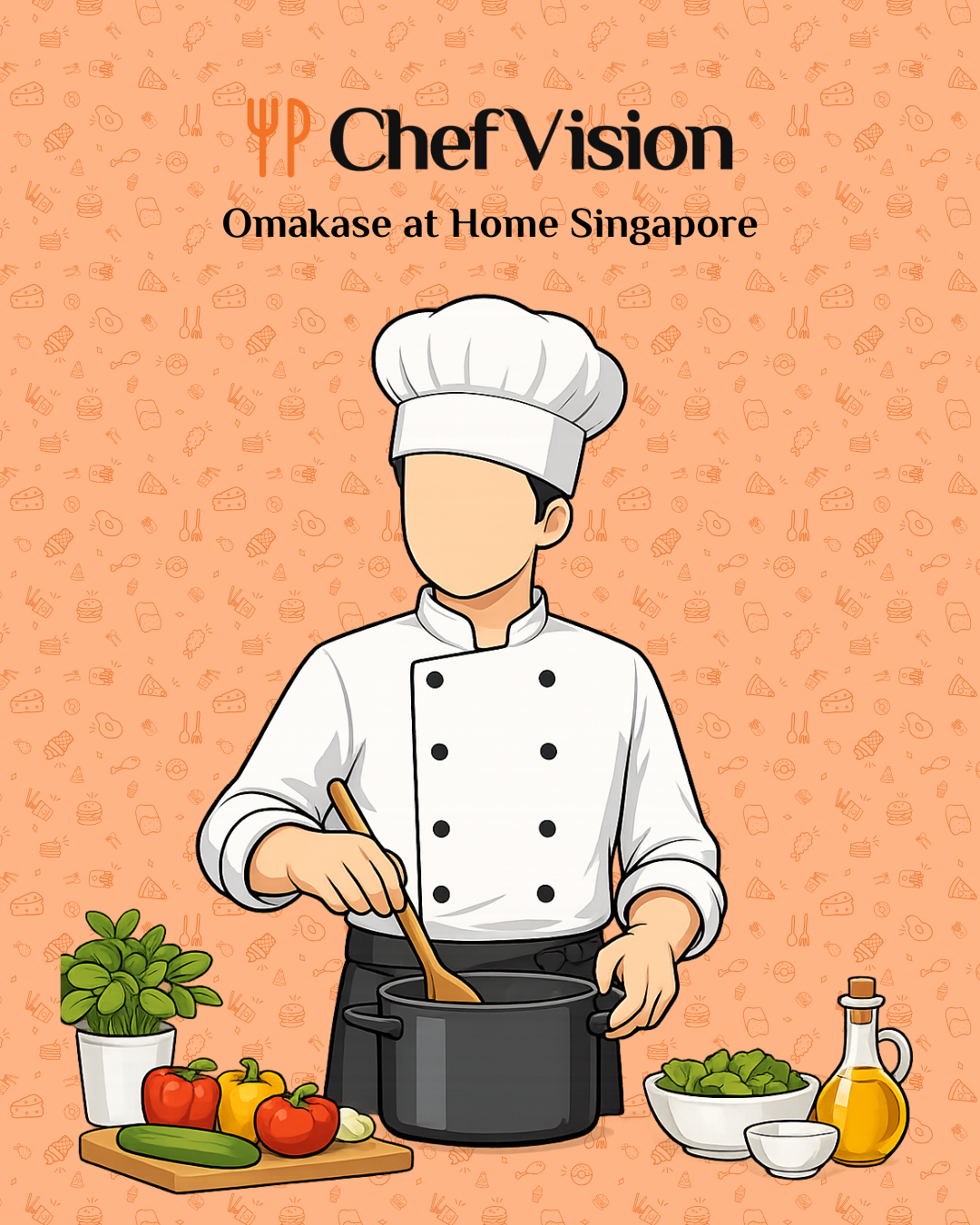
An at-home omakase is a luxury private dining service where a professional Japanese chef takes over your domestic kitchen to prepare a bespoke, multi-course meal. The term omakase translates to "I'll leave it to you," meaning the menu is entirely curated by the chef based on seasonal availability and culinary craftsmanship.
Unlike standard private catering where dishes are delivered pre-made or served buffet-style, an at-home omakase mimics the intimacy of an upscale sushi bar. The chef sets up a temporary workspace, often utilizing your kitchen island or dining table as a dynamic chef's counter. Diners watch the precise knife work, torching techniques, and hand-molding of nigiri sushi in real-time. This setup bridges the gap between high-end restaurant dining and the comfort of a private residence, making it a preferred choice for anniversaries, corporate entertainment, or milestone celebrations across Singapore.
How an at-home omakase dinner works in Singapore
1. Initial consultation and menu customization
The process begins weeks before the actual event begins. Once you contact a private sushi chef or boutique catering agency, you discuss the guest count, dietary restrictions, and preferred tier of menu complexity. While traditional omakase leaves the choices entirely to the chef, home services allow you to request specific highlights, such as extra focus on A5 Wagyu, a preference for seasonal uni, or entirely cooked courses for guests who avoid raw seafood.
2. Sourcing premium ingredients from Toyosu Market
Authenticity relies heavily on provenance. Leading private chefs in Singapore coordinate with distributors to secure seafood directly from Tokyo’s Toyosu Market. These ingredients are auctioned, packed, and flown into Changi Airport up to four times a week. The fish arrives at your doorstep pristine, fresh, and temperature-controlled, ensuring the same quality you would experience in a Michelin-starred establishment.
3. Chef's arrival and counter configuration
On the day of your dinner, the chef and an assistant arrive roughly 60 to 90 minutes before the first course. They bring their own specialized tools, including traditional Yanagiba cutting knives, custom wooden sushi rice tubs (hangiri), specialized dinnerware, and even portable induction burners if hot courses are on the menu. Your kitchen island or dining area is transformed into a functional sushi counter layout.
4. The dining sequence: from Otsumami to Dessert
Once your guests sit down, the meal unfolds in a traditional, highly orchestrated sequence:
Otsumami: A series of small, delicate appetizers designed to awaken the palate, showcasing seasonal vegetables, cooked delicacies, or cold sashimi.
Nigiri Courses: The core of the experience. The chef shapes seasoned warm rice and places hand-sliced seafood directly onto individual plates, instructing guests on the ideal way to eat each piece immediately.
Owuan & Yakimono: Warm dishes, which may include grilled premium proteins or a deeply savory dashi-based soup.
Dessert: A refreshing finish, typically featuring imported Japanese fruits like Shizuoka musk melon or artisan matcha-infused sweets.
5. Full kitchen restoration and cleanup
One of the distinct benefits of hiring a private chef is the complete absence of hosting chores. While you and your guests enjoy dessert, the chef’s assistant deep-cleans the kitchen workspace. They wash all utensils, wipe down counters, pack away their specialized plating, and dispose of all culinary waste, leaving your kitchen exactly as it was found.
The cost of private omakase catering in Singapore
Private omakase pricing in Singapore varies considerably depending on the chef's background, the rarity of the ingredients, and the number of courses.
According to private chef market data for 2026, baseline pricing for a boutique independent sushi chef starts at roughly S$180 to S$250 per person for a standard 12-course menu. Mid-tier contemporary fusion experiences generally range between S$280 and S$450 per head. For elite experiences featuring Michelin-adjacent master chefs who utilize premium ingredients like wild Bluefin tuna (Hon Maguro), multiple varieties of sea urchin (Uni), and white truffles, prices can exceed S$600 to S$1,000 per person. Most providers enforce a minimum spend requirement, usually equivalent to the cost of 4 to 6 adult diners, to cover transport, logistics, and market sourcing costs.
Tier | Average Per Head Cost | Ideal For | Key Focus |
Premium Elite | S$450 - S$1,000+ | VIP Corporate, Milestones | Rare Toyosu seasonal items, Edomae technique |
Mid-Tier Fusion | S$280 - S$450 | Birthday Parties, Socials | Modern pairings, Truffle/Caviar integrations |
Boutique Independent | S$180 - S$280 | Small Families, Anniversaries | Great value, highly direct chef interaction |
Crucial kitchen requirements for a private Japanese chef
You do not need a commercial-grade kitchen to host an omakase at home, but the chef does require specific spatial and structural elements to perform safely and efficiently.
Counter Space or Open Table: A flat kitchen island or an open dining table face-to-face with the kitchen is essential. The chef needs a clear area to lay out serving platters and build nigiri directly in front of guests.
Refrigeration Access: A section of your home refrigerator must be cleared out before the chef arrives so they can keep raw seafood at safe, precise temperatures until the moment of preparation.
Basic Sink and Stovetop: A clean sink with running hot water is mandatory for knife rinsing. Access to at least one or two stovetop burners or an electrical outlet for portable induction units is required for simmering soups or searing wagyu.
Trash Disposal: Clear accessibility to your trash chutes or waste bins so the cleanup assistant can manage kitchen waste throughout the night.
Omakase at home vs. Traditional restaurant dining
Deciding whether to book a private home experience or reserve a counter at a high-end restaurant depends entirely on the specific goals of your evening.
Omakase at Home
Pros: Unmatched privacy with no strangers overhearing conversations; complete control over the ambient music, volume, and lighting; zero travel or parking hassles; flexibility to pair your own rare wines and sakes without paying high restaurant corkage fees.
Cons: Requires a minimum kitchen footprint; lacks the curated architectural ambiance of a multi-million dollar restaurant interior; guest capacity is limited by your home's physical seating layout.
Traditional Restaurant Dining
Pros: Access to specialized, ultra-heavy industrial kitchen equipment; immersion in a purpose-built, traditional minimalist Japanese aesthetic; option to dine solo or in pairs without needing to meet a minimum group spend.
Cons: Rigid reservation timings and strict cancellation policies; high corkage fees for bringing your own alcohol; limited time at the counter as restaurants often run multiple dining shifts per evening.
Frequently Asked Questions
How far in advance do I need to book a private Japanese chef in Singapore?
For weekend bookings, it is best to reserve your date four to six weeks in advance. Because ingredients are flown in directly from Japan based on exact bookings, chefs need ample time to secure allocations from vendors at Tokyo markets. Weekday dinners can sometimes be arranged with two weeks' notice.
Can the chef accommodate dietary restrictions like seafood allergies or vegetarian preferences?
Yes, most private chefs can modify specific courses if notified during the initial consultation. However, because omakase is heavily centered around raw seafood and dashi stocks, a fully vegetarian or shellfish-free guest may receive altered hot courses or vegetable sushi variants rather than the standard menu items.
Do I need to provide the sake pairings, or does the private catering service include alcohol?
Most base packages exclude alcohol, allowing you to source your own sake, champagne, or wine without paying corkage fees. However, many premium private chefs offer optional alcohol pairing add-ons where they bring curated sakes chosen specifically to complement the flavor profiles of the night's specific seafood.
What happens if my kitchen space is too small or lacks an island counter?
If your kitchen is small or completely enclosed, chefs can easily set up a portable preparation table directly in your dining room. As long as there is an electrical outlet nearby and a flat surface where guests can sit facing the chef, the experience can be executed successfully.
Are service charges, GST, and cleaning fees included in the baseline per-head quote?
This depends entirely on the provider. Independent boutique chefs usually quote a flat net fee that covers everything. Larger catering agencies typically add prevailing GST and a standard service or transport fee to the final invoice. Always clarify if your quote is nett or subject to additional hidden fees before confirming.
Choosing a private chef for an omakase at home in Singapore turns a regular meal into a personalized culinary event. Whether you want an authentic Edomae experience or a modern fusion menu, working directly with a specialist lets you enjoy premium Japanese food exactly the way you want it, right in your own living room. If you are ready to plan your next gathering, explore our curated list of premier private chef services in Singapore to find the right fit for your kitchen, or read up on our latest analysis of luxury home dining trends shaping the local culinary scene.
Read more about: Private Dining Singapore: Restaurant-Quality Experience in Your Home