Networking Event Catering Singapore: How to Create a Memorable Corporate Dining Experience
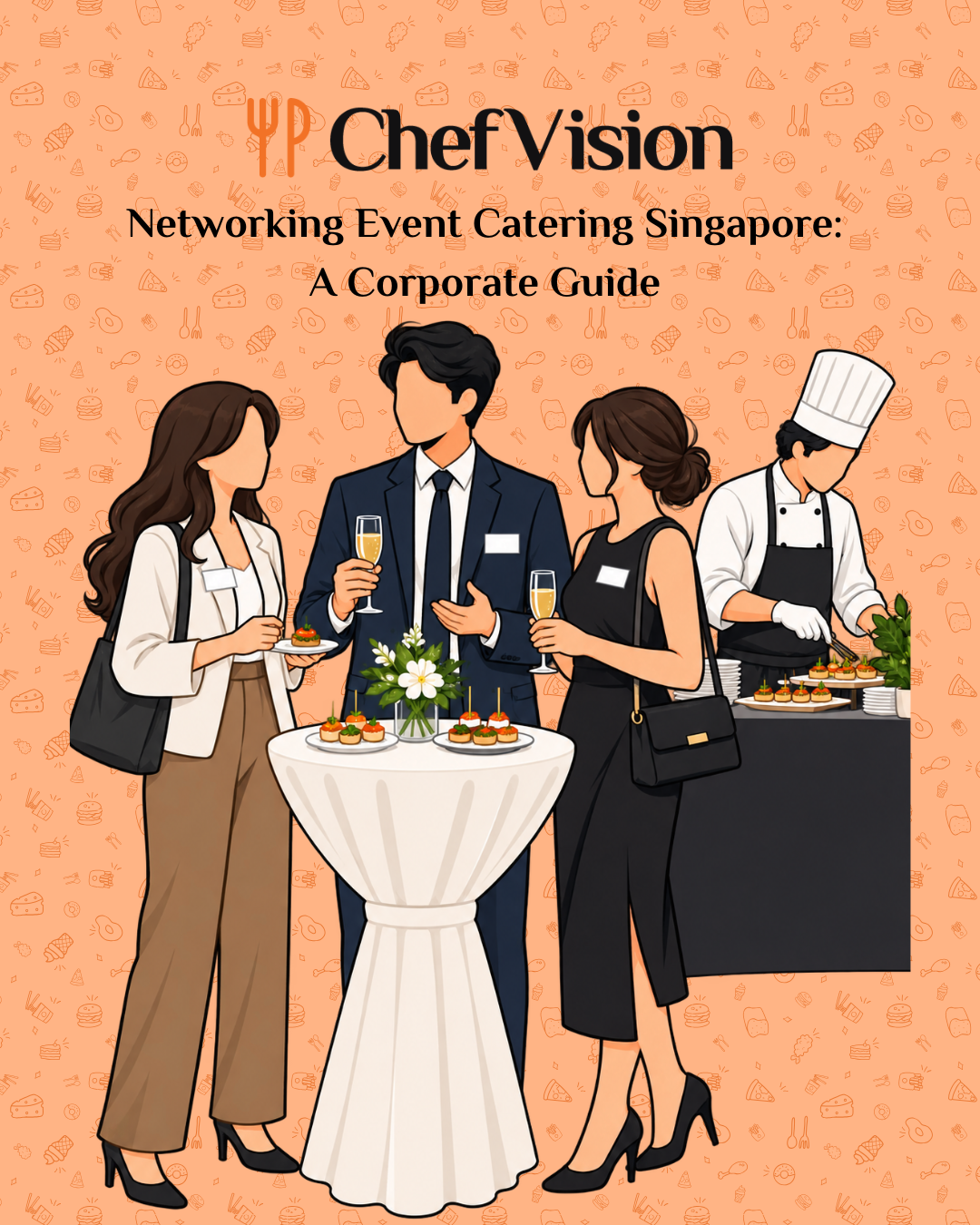
A successful networking event is about more than exchanging business cards. It is about creating an environment where people feel comfortable enough to start conversations, build relationships and remember the experience afterwards.
That is why networking event catering in Singapore deserves more thought than simply choosing enough food for the guest list.
The right catering format can influence how guests move around a venue, how easily they interact with one another and how the overall event feels. From bite-sized canapés and cocktail-style menus to chef-led food stations and customised dining experiences, the catering setup should support the purpose of the event.
For corporate teams, HR professionals, event organisers and hosts, the key is finding a balance between quality, convenience, presentation, dietary requirements and guest interaction.
This guide explains what to consider when planning networking event catering in Singapore and how to choose a catering approach that works for your event.
What Is Networking Event Catering?
Networking event catering refers to food and beverage services designed specifically for events where guests are expected to interact, mingle and move around rather than remain seated for an entire meal.
Common examples include:
- Corporate networking sessions
- Business mixers
- Industry networking events
- Company appreciation events
- Client engagement events
- Product launches
- Conferences and seminars
- Startup networking nights
- Professional association gatherings
- Investor or partner events
- Corporate cocktail receptions
Unlike a traditional seated dinner, networking events usually require food that is easy to eat while standing or while holding a drink and conversation.
This makes menu format just as important as the dishes themselves.
Why Catering Matters at a Networking Event
Food naturally creates opportunities for conversation. A well-designed catering setup can give guests something to gather around, discuss and experience together.
For example, a beautifully presented canapé station can encourage guests to move around the venue, while a chef-attended station can become a natural conversation point.
The goal is not simply to provide food. It is to make the food work alongside the event.
1. Food Can Encourage Guest Interaction
Networking can feel awkward when guests do not have an obvious reason to approach one another.
Interactive food stations, shared platters and visually interesting dishes can create natural conversation starters.
Instead of opening a conversation with a formal introduction, guests might begin by discussing a dish, asking about an ingredient or deciding which item to try next.
2. The Catering Format Can Influence Guest Movement
A traditional buffet may work well for some corporate events, but it is not always ideal for a networking environment.
Guests carrying full plates may find it difficult to move around or engage in conversations.
For networking events, organisers may instead consider:
- Canapés
- Finger foods
- Small plates
- Mini desserts
- Passed appetisers
- Cocktail-style menus
- Food stations
- Chef-attended stations
- Individually portioned dishes
The best format depends on the event schedule, venue layout and expected guest behaviour.
3. Food Contributes to the Event's Brand Experience
Corporate events are also opportunities for organisations to communicate their identity.
A technology company might prefer a modern, interactive menu. A luxury brand may want a more refined dining presentation. An international business event may benefit from a menu inspired by different cuisines.
This is where customised catering can become more valuable than simply selecting the cheapest package.
Best Catering Styles for Networking Events in Singapore
There is no single menu format that works for every networking event. The right choice depends on the number of guests, venue, event duration, budget and desired level of interaction.
Canapés and Finger Food
Canapés are one of the most practical options for networking events.
They are generally small, easy to portion and designed to be eaten without requiring a full dining setup.
Examples include:
- Mini tartlets
- Skewers
- Crostini
- Small savoury pastries
- Mini sandwiches
- Seafood bites
- Gourmet sliders
- Vegetable-based appetisers
For standing receptions, bite-sized dishes allow guests to continue conversations without having to sit down for a complete meal.
Cocktail-Style Catering
Cocktail catering is particularly suitable for evening networking events.
Instead of a traditional three-course meal, guests can enjoy a selection of smaller dishes throughout the event.
This format can create a more relaxed atmosphere while allowing guests to circulate around the venue.
Food Stations
Food stations can make catering more interactive.
Depending on the event, stations might include:
- Pasta stations
- Grill stations
- Asian-inspired food stations
- Dessert stations
- Live cooking stations
- Chef-attended counters
Food stations can also help break up a large venue and encourage guests to move between different areas.
Chef-Led Dining Experiences
For smaller or more premium networking events, organisers may consider a chef-led experience rather than conventional catering.
A professional chef can create a customised menu around the event's theme, audience and venue.
This approach can be particularly useful for executive networking dinners, client entertainment and smaller corporate gatherings where the dining experience is part of the event itself.
ChefVision connects diners with professional chefs for corporate and private events, including customised culinary experiences. Its services include Private Chef Finder and Dine by Design, allowing event hosts to discuss their requirements and develop a dining experience around the occasion.
How to Choose the Right Networking Event Menu
Choosing dishes should start with the event objectives rather than the menu itself.
Before contacting a caterer, consider the following questions.
How Many Guests Are Attending?
Guest count affects everything from food quantities to staffing and service format.
A menu suitable for 20 executives may not work the same way for a 200-person networking reception.
Provide the caterer with the most accurate guest estimate possible and communicate whether you expect attendance numbers to fluctuate.
Will Guests Be Standing or Seated?
This is one of the most important questions.
If guests will primarily be standing, prioritise food that is:
- Easy to hold
- Easy to eat
- Served in small portions
- Not overly messy
- Suitable for social interaction
For seated networking dinners, you have greater flexibility with plated courses, family-style dining and more elaborate menus.
How Long Is the Event?
A one-hour networking session with light refreshments requires a very different catering strategy from a four-hour evening event.
Consider whether catering covers:
- Welcome refreshments
- Light bites
- Main meal
- Dessert
- Late-evening snacks
- Coffee and tea
Timing also matters because food should be replenished appropriately throughout the event.
What Dietary Requirements Should You Plan For?
Corporate events often involve guests with different dietary preferences and restrictions.
When planning networking event catering in Singapore, ask about requirements such as:
- Vegetarian
- Vegan
- Halal
- Gluten-free
- Dairy-free
- Nut allergies
- Seafood allergies
- Other food allergies or intolerances
Do not simply assume that removing one ingredient makes a dish suitable for someone with an allergy.
For serious allergies, communicate the requirement clearly with the catering team before the event so the appropriate preparation and handling procedures can be discussed.
Food Safety Should Be Part of Your Catering Checklist
Food safety is particularly important when serving food to large groups.
Singapore's Food Agency recommends engaging licensed food caterers for catered functions and checking their hygiene track record.
The current SAFE framework also allows consumers to check the safety record and grade of licensed food establishments through SFA's track-record system.
For corporate organisers, this means food safety should be considered alongside menu quality and presentation.
When comparing catering providers, ask:
- Is the caterer licensed for catering activities?
- What food safety systems are in place?
- How will hot and chilled food be maintained at safe temperatures?
- How will allergens and dietary requirements be communicated?
- Who will oversee food service during the event?
- How will leftover food be handled?
These questions can help HR teams and event organisers make more informed catering decisions.
How Much Does Networking Event Catering Cost in Singapore?
There is no single price for networking event catering in Singapore.
The final cost can vary depending on:
- Number of guests
- Menu selection
- Ingredients
- Cuisine
- Service style
- Event duration
- Staffing
- Equipment
- Venue requirements
- Setup and teardown
- Level of customisation
- Chef involvement
This is why comparing caterers purely by price per person can sometimes be misleading.
A lower quoted price may cover food only, while another quotation may include setup, serving staff, equipment and additional event support.
When requesting a quotation, ask what is included.
What Should Be Included in a Catering Quote?
Ideally, your quotation should clearly identify whether the following are included:
- Food
- Delivery
- Setup
- Serving equipment
- Buffet equipment
- Tableware
- Service staff
- Chef fees
- Live stations
- Cleanup
- Additional venue requirements
Clear quotations make it easier for corporate teams to compare proposals based on the complete event experience rather than headline pricing alone.
Networking Event Catering vs Traditional Corporate Catering
Traditional corporate catering often focuses on efficient meal service.
Networking event catering has a slightly different objective.
The food needs to support interaction.
Traditional Corporate Catering | Networking Event Catering |
| Focuses on efficient meal service | Focuses on food and guest interaction |
| Often buffet or boxed meals | Often canapés, small plates or stations |
| Guests may remain seated | Guests often move around |
| Practicality is a major priority | Practicality and presentation both matter |
| Menu may be selected from fixed packages | Menu can be customised around the event |
| Designed primarily to feed guests | Designed to contribute to the overall experience |
Neither format is inherently better for every event. The right option depends on what you want guests to do during the event.
How ChefVision Can Support Corporate Networking Events
For organisers looking for something beyond standard drop-off catering, ChefVision provides access to professional chefs for corporate and private events.
Instead of beginning with a fixed menu, hosts can communicate details such as:
- Event type
- Guest count
- Venue
- Budget
- Cuisine preferences
- Dietary requirements
- Desired dining style
- Event theme
- Level of chef involvement
The chef can then help shape a menu around those requirements.
This can be particularly useful for smaller networking dinners, executive gatherings, client entertainment and corporate events where food is intended to be part of the experience.
ChefVision's platform is designed to connect diners with chefs and allows users to browse chefs, discuss event requirements, customise menus and arrange bookings.
For corporate hosts, the benefit is not simply finding someone to prepare food. It is having the opportunity to build a dining experience that fits the event.
A Simple Checklist for Planning Networking Event Catering
Before confirming your caterer, work through this checklist:
Event Details
- Confirm date and venue
- Confirm expected guest count
- Determine event duration
- Decide whether guests will stand or sit
- Identify the networking objectives
Menu
- Select an appropriate catering format
- Choose dishes that are easy to eat
- Include vegetarian options
- Confirm halal requirements where applicable
- Identify allergies and dietary restrictions
- Consider cuisine and event theme
- Plan dessert and beverage options
Logistics
- Confirm delivery time
- Confirm setup requirements
- Confirm serving equipment
- Confirm staffing requirements
- Check venue kitchen/access requirements
- Confirm cleanup arrangements
Safety
- Use an appropriately licensed caterer
- Check the caterer's food safety record
- Communicate allergen requirements
- Confirm appropriate hot and cold food handling
Establish a plan for food replenishment
Final Thoughts: Make the Food Part of the Networking Experience
The best networking event catering in Singapore does more than keep guests fed.
It supports the atmosphere, encourages interaction and contributes to how people remember the event.
For large corporate receptions, practical canapés and food stations may be the right solution. For smaller executive gatherings, a customised chef-led dining experience may create a more personal setting.
The important thing is to start with the event itself.
Who are your guests? What do you want them to experience? How much interaction should the food create? What dietary requirements need to be considered? And how involved should the chef or catering team be?
Once these questions are clear, choosing the right catering format becomes much easier.
For companies and HR teams planning a corporate networking event, ChefVision offers a way to explore chef-led and customised culinary experiences designed around your event requirements.
Planning a networking event in Singapore? Explore ChefVision's private chef and customised dining options to create a corporate food experience tailored to your guests.
Read more about: Private Chef Singapore: Hiring Costs and What to Expect
The Complete Planning Guide for Dinner Party in Singapore
Be a Guest at Your Own Dinner Party: The Host’s Guide to Presence
Back to List