How to Set a Dinner Party Table That Wows Your Guests
Hosting a dinner party in Singapore isn’t just about the food, it’s about the experience. From ambiance to plating, every detail contributes to how your guests feel. And if you’ve ever wondered how to set up a table for dinner, party gatherings that truly impress, you’re in the right place.
In this guide, we’ll walk you through expert-level table styling strategies, practical hosting tips, and modern trends tailored for Singaporean diners and curated experiences like those offered by ChefVision.
Why Table Setting Matters More Than You Think
A well-set table does more than look pretty; it sets expectations.
In Singapore’s increasingly experience-driven dining culture, presentation is everything. Whether you're hosting friends, clients, or family, your table:
Signals effort and attention to detail
Enhances the perceived value of the meal
Creates Instagram-worthy moments (yes, it matters)
Improves flow and comfort during dining
When done right, your table becomes part of storytelling.
How to Set a Table for Dinner Party: The Essentials
Before diving into aesthetics, you need a strong foundation. Here’s the classic structure every host should master.
1. Start with the Basics
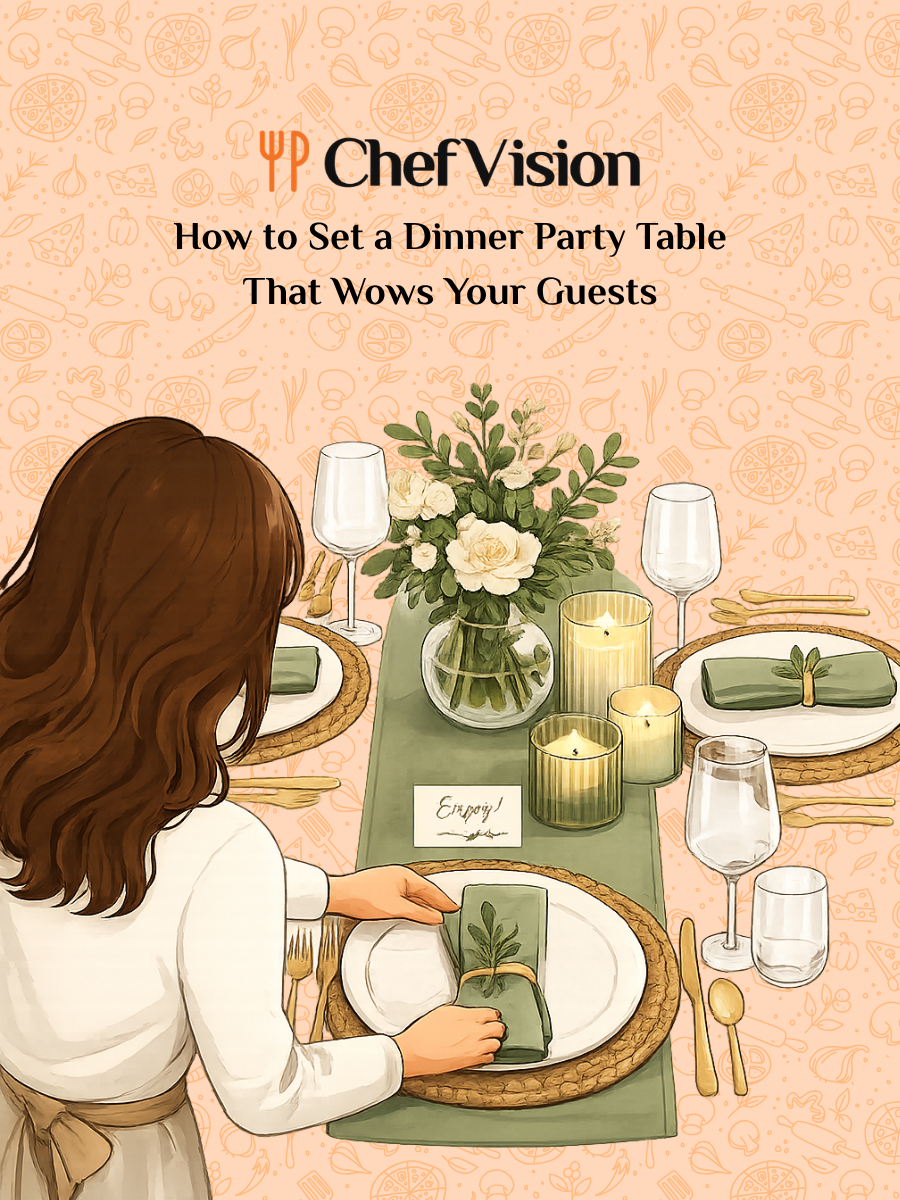
Every dinner table setup begins with these core elements:
Dinner plate (centered)
Forks (left side)
Knives and spoons (right side)
Glassware (top right)
Napkin (either on plate or left side)
Pro Tip: Work from the outside, your guests will use utensils in order of courses.
2. Choose a Theme or Concept
The best dinner parties feel cohesive. Your table should match your:
Cuisine (e.g., Italian, Asian fusion, French)
Occasion (birthday, intimate gathering, business dinner)
Venue (condo dining room, rooftop, landed home garden)
In Singapore, popular themes include:
Minimalist chic (neutral tones, clean lines)
Tropical luxe (greenery, rattan, gold accents)
Modern Asian (ceramics, dark wood, textured linens)
3. Layer Your Table Setting
Professional hosts don’t stop at plates; they layer.
Base Layer
Tablecloth or runner
Charger plates (optional but adds elegance)
Middle Layer
Dinnerware (plates, bowls)
Napkins
Top Layer
Centerpieces
Name cards (for formal settings)
Layering adds depth and visual richness without overcrowding.
Elevate Your Setup with Styling Details
This is where your table goes from “nice” to “wow.”
Lighting: The Secret Ingredient
Lighting defines mood.
Use warm lighting for intimate dinners
Add candles (unscented to avoid interfering with food aroma)
Consider fairy lights for outdoor setups
In Singapore condos, where lighting can be harsh, dimming or layering light sources makes a big difference.
Centerpieces That Don’t Get in the Way
Avoid tall, obstructive arrangements. Instead:
Low floral arrangements
Small potted plants
Minimalist candle clusters
Your guests should see each other not fight through a jungle of decor.
Napkin Styling Techniques
Napkins are underrated.
Try:
Classic fold on plate
Knot style for casual dinners
Napkin ring for elegance
Cloth napkins instantly elevate your table compared to paper.
Singapore-Specific Hosting Tips
Hosting in Singapore comes with unique considerations.
Space Optimization
Many homes have limited dining space, so:
Avoid oversized centerpieces
Use stackable or compact tableware
Consider extendable tables
Weather Considerations (Outdoor Dining)
If you’re hosting outdoors:
Choose weighted table linens
Avoid candles that easily blow out
Use insect-repellent solutions discreetly
Cultural Sensitivity
Singapore is multicultural be mindful of:
Dietary restrictions (halal, vegetarian, allergies)
Serving styles (shared vs individual plating)
This is where platforms like ChefVision shine, connecting you with chefs who understand diverse preferences.
Pairing Table Setting with Food Presentation
Your table should complement, not compete with the food.
Match Tableware to Cuisine
Japanese meals → minimalist ceramics
Western fine dining → white porcelain
Rustic meals → stoneware or wood
Plate Like a Pro
Even simple dishes can look premium with:
Balanced portions
Clean plate edges
Color contrast
If you’re working with a private chef (like those from ChefVision), coordinate table styling with the menu for a seamless experience.
Common Mistakes to Avoid
Even well-intentioned hosts make these errors:
Overcrowding the table
Mixing too many styles or colors
Using overly strong scented candles
Forgetting practicality (e.g., no space for serving dishes)
Ignoring guest comfort
Remember: aesthetics should never compromise usability.
Advanced Table Setting Ideas (For Next-Level Hosts)
If you want to truly stand out:
Personalized Place Settings
Name cards
Small welcome notes
Customized menus
Multi-Course Table Planning
Instead of setting everything at once:
Reset between courses
Introduce new elements gradually
Interactive Elements
DIY plating stations
Wine pairing cards
Chef storytelling (perfect with ChefVision experiences)
Read more about: Private Chef For Events In Singapore: The Ultimate Dining Experience
FAQ Section (People Also Ask Style)
How do you set a formal dinner table step by step?
Start with a charger plate, place dinnerware centrally, arrange forks on the left, knives and spoons on the right, and position glassware above. Add napkins and centerpieces last.
What should be on a dinner party table?
Essential items include plates, utensils, glassware, napkins, and a centerpiece. Optional additions include place cards, menu cards, and decorative elements.
How do I make my dinner table look expensive?
Use layered textures, neutral color palettes, cloth napkins, and proper lighting. Even affordable items can look premium when styled thoughtfully.
What is the proper table setting for etiquette?
Follow outside-in utensil placement, ensure symmetry, and maintain cleanliness. Avoid overcrowding and ensure that each guest has adequate space.
How do I host a dinner party in a small Singapore apartment?
Focus on minimalist setups, use vertical space sparingly, and keep decor functional. Consider curated experiences via ChefVision to reduce prep stress.
Mastering how to set a table for dinner party occasions is about blending functionality with style. In Singapore’s dynamic dining scene, guests expect more than just good food, they want an experience.
By combining thoughtful table design, cultural awareness, and curated culinary experiences (like those from ChefVision), you can transform any gathering into something unforgettable.