Planning a Corporate Dinner in Singapore?
A corporate dinner is more than simply arranging food for a group of colleagues.
It can be an opportunity to celebrate a company milestone, recognise employees, entertain clients, welcome business partners or bring a team together outside the usual office environment. And because food naturally brings people together, the right dining experience can make a corporate event feel considerably more memorable.
For HR teams and event organisers, however, planning a corporate dinner comes with plenty of decisions. How formal should the meal be? Should you choose a buffet, plated dinner or sharing menu? How should halal, vegetarian and allergy requirements be handled? Does the venue allow external catering? And how much should you actually budget?
This guide to corporate dinner catering in Singapore covers the key decisions to consider, from choosing the right menu and service style to creating a dining experience that suits your guests and the purpose of your event.
What Is Corporate Dinner Catering?
Corporate dinner catering refers to professionally prepared food and dining services for business-related events.
These can include:
Company dinners
Employee appreciation events
Client dinners
Team celebrations
Executive dinners
Networking events
Company anniversaries
Award ceremonies
Year-end celebrations
Business partner dinners
Corporate private dining
Product or brand events
Catering can take many forms. A large company dinner might use a buffet or food stations, while a smaller client dinner could involve a plated menu or private chef.
The right format depends on the number of guests, event purpose, venue, budget and dining experience you want to create.
That is why choosing corporate catering should start with the event itself rather than simply choosing the cheapest available package.
Choosing the Right Corporate Dinner Catering Format
There is no universal catering format that works for every corporate event.
The best choice depends on what you want guests to experience.
Buffet Catering
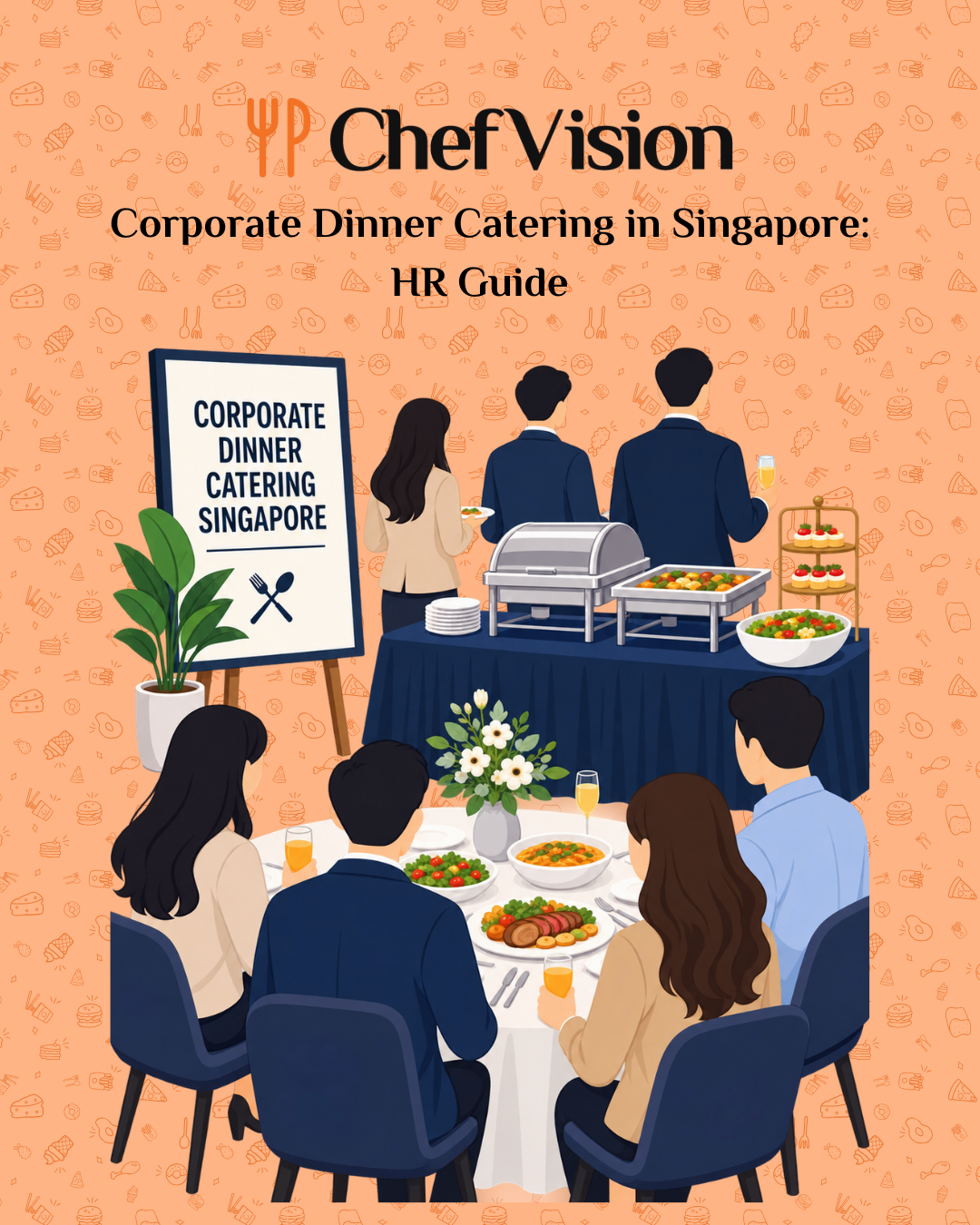
Buffet catering is one of the most practical options for larger corporate dinners.
Guests can choose from several dishes according to their preferences, making it easier to accommodate different tastes within one event.
Best suited for:
Larger company dinners
Employee celebrations
Casual team events
Networking events
Year-end gatherings
Advantages
Offers variety
Allows guests to choose their own portions
Works well for larger groups
Can accommodate different food preferences
Encourages guests to move around and interact
The main consideration is the flow of service. With a large guest list, organisers should think about buffet layout, queue management and whether enough serving points are available.
Plated Corporate Dinner
A plated dinner provides a more structured and formal experience.
Instead of guests serving themselves, courses are served individually at the table.
Best suited for:
Executive dinners
Client entertainment
VIP events
Formal celebrations
Smaller corporate gatherings
Plated dining can create a restaurant-style experience and give the meal a stronger sense of occasion.
However, it requires more coordination. The catering team needs to manage service timing carefully, particularly when guests have different dietary requirements.
Sharing-Style Corporate Dinner
Sharing menus offer a balance between a formal dinner and a casual meal.
Dishes are placed in the centre of the table for guests to share.
This format can work particularly well for corporate groups because eating together naturally encourages conversation.
Best suited for:
Team dinners
Client dinners
Smaller corporate groups
Informal celebrations
Multicultural dining experiences
Sharing menus can also make it easier to showcase several dishes without turning the dinner into a formal multi-course experience.
Private Chef or Bespoke Corporate Dining
For smaller groups or important occasions, a more personalised dining experience may be appropriate.
Instead of selecting a standard catering package, organisers can work with a chef to create a menu around the event.
A bespoke corporate dinner could involve:
A customised menu
Chef-led dining
Multiple courses
Cuisine inspired by the company's theme
Singapore-inspired dishes
Dietary-specific menus
Private dining
Chef explanations or storytelling
This approach can be particularly suitable for executive dinners, important clients and company celebrations where the meal itself is intended to be part of the experience.
How to Choose Corporate Dinner Catering in Singapore
Before choosing a caterer, consider five key questions.
1. How many guests are attending?
Guest numbers will influence almost every part of the catering plan.
A dinner for 15 people has very different requirements from a dinner for 150.
Larger events may benefit from buffets or food stations, while smaller groups have more flexibility to consider plated or chef-led dining.
Try to establish an estimated guest count early, even if the final number is not yet confirmed.
2. What is the purpose of the event?
Think about why the dinner is being organised.
Is it an:
Employee appreciation dinner?
Client dinner?
Team-building event?
Company anniversary?
Executive gathering?
Networking event?
Year-end celebration?
The answer should influence the level of formality.
For example, a casual team appreciation dinner may work better with a relaxed sharing menu, while an executive client dinner could benefit from a more curated dining experience.
3. Where is the dinner taking place?
Your venue can determine what type of catering is possible.
Corporate dinners may take place in:
Offices
Hotels
Restaurants
Private dining spaces
Event venues
Rooftops
Private residences
Company premises
Before booking an external caterer, check whether the venue permits outside catering.
You should also ask about:
Kitchen access
Loading and unloading
Setup space
Electricity requirements
Tables and chairs
Waste disposal
Cleanup
Event access times
A caterer may have an excellent menu, but logistical restrictions can make an otherwise suitable option impractical.
4. What level of formality do you want?
A corporate dinner does not automatically need to be formal.
Think about the atmosphere you want.
Casual
Suitable for team bonding and employee appreciation.
Semi-formal
Suitable for company celebrations and networking.
Formal
Suitable for executives, VIP clients and major corporate occasions.
The service style, menu presentation and venue should all support that atmosphere.
5. What do your guests actually want to eat?
This is particularly important in Singapore.
A corporate guest list may include people from different cultural backgrounds, dietary preferences and culinary traditions.
Instead of assuming everyone will enjoy the same cuisine, consider offering a menu with enough variety while keeping the overall meal cohesive.
Corporate Dinner Menu Ideas for Singapore Events
Your menu can be one of the most memorable parts of the evening.
Rather than automatically choosing a generic Western buffet, consider the type of experience you want the food to provide.
Singapore-Inspired Corporate Menus
For overseas clients or international teams, Singapore-inspired dishes can make the dinner feel connected to its location.
A menu could draw inspiration from:
Peranakan cuisine
Chinese cuisine
Malay cuisine
Indian cuisine
Southeast Asian flavours
Singapore hawker culture
This can be especially effective for companies hosting overseas colleagues or business partners.
Food becomes more than something guests eat, it becomes part of the Singapore experience.
Asian-Inspired Menus
Asian menus can provide plenty of variety while remaining familiar to Singaporean diners.
Possible directions include:
Chinese
Japanese
Korean
Thai
Vietnamese
Indian
Southeast Asian fusion
These cuisines can also work well with sharing-style service.
Western Menus
A Western-inspired menu can be a practical choice for formal corporate events.
A typical structure might include:
Starter → Main course → Side dishes → Dessert
The menu can be made more distinctive through ingredient selection, presentation and chef preparation rather than simply offering standard corporate dishes.
Vegetarian and Plant-Forward Menus
Vegetarian guests should have more than one side dish to choose from.
A thoughtfully planned menu can include:
Vegetable appetisers
Plant-based proteins
Grain-based dishes
Vegetarian mains
Seasonal vegetables
Plant-based desserts
A strong vegetarian menu can also be enjoyed by guests who are not vegetarian.
Dietary Requirements for Corporate Dinners
Dietary planning should happen before the event, not when guests sit down at the table.
When collecting RSVPs, HR teams can ask guests to identify relevant dietary requirements and food allergies.
Common considerations include:
Halal
Vegetarian
Vegan
Gluten-free
Dairy-free
Nut allergies
Seafood allergies
Religious dietary requirements
Halal Catering
For events involving Muslim guests, organisers should confirm the caterer's halal status and food preparation practices.
Do not assume that a dish is halal simply because it does not contain pork.
The preparation and handling of food also matter.
If halal catering is required, communicate this clearly with the caterer before the menu is finalised.
Food Allergies
Food allergies require particular attention.
If a guest has a serious allergy, the organiser should communicate the requirement directly to the catering team and ask about ingredient information and cross-contact procedures.
The caterer should be told exactly which ingredients must be avoided.
How Much Does Corporate Dinner Catering Cost in Singapore?
There is no single price for corporate dinner catering because costs can vary significantly between events.
The final quotation can depend on:
Number of guests
Menu selection
Cuisine
Ingredients
Buffet or plated service
Staffing
Venue
Equipment
Setup requirements
Dietary modifications
Chef involvement
Degree of menu customisation
Event duration
This is why comparing caterers based only on a headline price can be misleading.
A lower-priced package may not include setup, service staff, equipment or additional dietary meals.
Instead, compare the total cost and inclusions.
What should you check in a catering quotation?
Ask whether the quotation includes:
Food
Delivery
Setup
Service staff
Tableware
Cutlery
Serving equipment
Buffet equipment
Cleanup
Dietary-specific meals
Transportation
Taxes
Service charges
This makes it much easier to compare different catering options fairly.
How HR Teams Can Plan a Corporate Dinner Budget
For HR teams, catering is only one part of the event budget.
Consider dividing the overall budget into:
Catering
Food and beverages are usually the main dining expense.
Staffing
Formal dinners may require more service staff than buffet events.
Venue
If the company does not have a suitable space, venue rental may become a significant expense.
Equipment
Depending on the venue, you may need tables, tableware, serving equipment or other event equipment.
Entertainment
Some corporate dinners include:
Live performances
Music
Games
Awards
Speeches
Photo booths
Contingency
It is wise to leave some budget available for unexpected changes.
The final guest count, dietary requirements or event logistics can change closer to the event date.
Corporate Dinner Catering for Different Occasions
The best catering style can change depending on the reason for the event.
Employee Appreciation Dinner
The focus should be on making employees feel valued.
A relaxed atmosphere, diverse menu and sharing-style dining can work well.
The event does not necessarily need to feel overly formal.
Client Dinner
Client dinners require more attention to detail.
Consider:
Menu quality
Presentation
Service
Dietary preferences
Venue
Conversation-friendly seating
The objective is to create a comfortable environment where the meal supports the business relationship rather than dominating it.
Executive Dinner
Executive groups may benefit from smaller, more private dining environments.
A curated menu or private chef experience can provide a more personalised setting.
Company Anniversary Dinner
An anniversary dinner is an opportunity to incorporate the company's story.
You could create a menu inspired by:
Company history
Founding location
Brand identity
Milestones
Employees
Singaporean heritage
This gives the food a connection to the occasion.
Team-Building Dinner
The dining format should encourage interaction.
Sharing menus can work particularly well because guests naturally discuss and share dishes.
Avoid overly rigid arrangements if the objective is team bonding.
Year-End Corporate Dinner
Year-end dinners are often larger and more celebratory.
Depending on the guest count, buffet stations, sharing menus or interactive food stations can help create a more festive atmosphere.
How to Make a Corporate Dinner More Memorable
A corporate dinner does not need an extravagant budget to feel special.
Often, the difference comes from thoughtful details.
Create a Menu Around the Occasion
Instead of choosing unrelated dishes, create a menu with a theme or story.
For example, a Singapore-inspired dinner for overseas guests could showcase different culinary influences found across the country.
Introduce Interactive Food
Depending on the venue, live stations can make the meal more engaging
Examples include:
Live carving
Pasta stations
Dessert stations
Chef-led preparation
Local food stations
Give Guests Something to Talk About
Food can become part of the conversation.
A chef explaining the inspiration behind a dish, for example, can add another layer to the experience.
Consider a Bespoke Menu
A customised menu can be especially effective for smaller corporate events.
Rather than choosing a standard package, the organiser and chef can consider the guest profile, event objective and preferred cuisine.
This is where bespoke corporate dining can offer something different from conventional catering.
Corporate Catering vs Bespoke Dining
These terms are sometimes used interchangeably, but they can represent different experiences.
Traditional corporate catering
Usually focuses on:
Efficient service
Predictable menus
Larger groups
Convenience
Consistent portions
Bespoke dining
Focuses more on:
Personalisation
Chef involvement
Curated menus
Guest experience
Storytelling
Smaller or specialised events
Neither is automatically better.
A 150-person employee dinner may be better suited to conventional catering, while a 15-person executive dinner could benefit from bespoke dining.
The key is matching the catering model to the event.
A Simple Corporate Dinner Planning Timeline
Planning early makes the process significantly easier.
6–8 Weeks Before
Confirm:
Event objective
Estimated guest count
Budget
Venue
Catering format
Preferred cuisine
Start comparing catering options.
4–6 Weeks Before
Shortlist the caterer and begin discussing:
Menu
Service
Dietary requirements
Equipment
Setup
Event timing
2–3 Weeks Before
Confirm:
Guest numbers
Dietary requirements
Seating arrangements
Programme
Catering logistics
1 Week Before
Reconfirm:
Final guest count
Menu
Venue access
Delivery time
Setup requirements
Special dietary meals
Main event contact
On the Day
Ideally, assign one person to coordinate directly with the catering team.
This reduces confusion and prevents multiple organisers from giving different instructions.
Questions to Ask Before Booking a Corporate Caterer
Before confirming your catering, ask:
About the menu
Can the menu be customised?
Are vegetarian options available?
Can halal requirements be accommodated?
How are allergies handled?
Can dishes be modified?
About service
Is the food delivered or served?
How many staff are included?
Is setup included?
Is cleanup included?
About logistics
What time will the team arrive?
Does the venue require kitchen access?
What equipment is needed?
How much setup space is required?
About pricing
Are taxes included?
Are service charges included?
Is delivery included?
Are there minimum order requirements?
What happens if the guest count changes?
About cancellation
What is the cancellation policy?
When is the final guest count required?
What happens if the event date changes?
Getting clear answers before booking can prevent unexpected costs and logistical problems later.
Common Corporate Dinner Catering Mistakes to Avoid
Choosing the Menu Before Understanding the Guests
Start with your guest profile.
The menu should reflect the people attending the event.
Leaving Dietary Requirements Until the Last Minute
This can make it much harder for the catering team to provide suitable alternatives.
Collect dietary information as part of the RSVP process.
Choosing the Cheapest Quote Automatically
Price matters, but so do inclusions, service quality, flexibility and reliability.
Compare the complete quotation rather than one number.
Ordering Too Many Different Dishes
More dishes do not automatically mean a better dinner.
A smaller, well-designed menu can provide a more cohesive dining experience.
Forgetting Venue Restrictions
Always check whether external catering is permitted and what facilities are available.
Not Confirming Setup and Cleanup
A catering quotation should make clear who is responsible for setting up, serving and clearing the dining area.
Corporate Dinner Catering Checklist for HR Teams
Before confirming the event, make sure you have considered:
Event purpose
Estimated guest count
Final guest count deadline
Catering budget
Venue
Catering format
Menu
Dietary requirements
Food allergies
Halal requirements
Service staff
Equipment
Setup time
Cleanup
Delivery arrangements
Seating
Event programme
Catering contact person
Contingency plan
Frequently Asked Questions About Corporate Dinner Catering in Singapore
What is the best corporate dinner catering in Singapore?
There is no single best option, but a quick way to decide is by guest count and purpose: larger, informal gatherings usually lean toward buffet, while client-facing or executive events tend to justify the extra coordination of plated or bespoke service.
How early should I book corporate dinner catering?
For larger or customised corporate dinners, it is sensible to start planning several weeks in advance. This gives you more time to secure the venue, confirm the menu and communicate dietary requirements.
How much should I budget for a corporate dinner?
Ask each caterer for an itemised quotation broken down by food, staffing, equipment and setup, rather than comparing a single headline figure. That breakdown is what actually reveals whether one quote is cheaper or just missing inclusions the other one has.
Can corporate catering accommodate halal and vegetarian guests?
Yes, most Singapore caterers can. Get it in writing rather than assuming: ask for the specific certification reference for halal, and for vegetarian guests, confirm whether shared cooking equipment or prep surfaces are involved.
Is buffet catering better than a plated dinner?
Neither, it depends what you're optimising for. If headcount and flexibility matter most, buffet wins. If the meal itself needs to feel like part of the occasion, plated service is worth the extra coordination.
Can I have a private chef for a corporate dinner?
Yes. Before booking one, check with the venue whether it has the kitchen access and prep space a chef-led menu needs, since that's usually the deciding factor rather than guest count alone.
What should HR ask guests before a corporate dinner?
At minimum, collect RSVP confirmations and relevant dietary requirements or food allergies. You can also ask about accessibility or seating requirements where appropriate.
Can corporate catering be held in an office?
Potentially, but the office must permit external catering and have sufficient space and facilities for food setup and service. Check building and venue rules before booking.
How can I make a corporate dinner more memorable?
Pick one detail rather than trying everything at once, and let it match the reason for the event: a Singapore-inspired menu works well for overseas guests, while a chef explaining a dish suits a smaller, more intimate group
Final Thoughts
The best corporate dinners are not necessarily the biggest or most expensive ones.
They are the dinners where the food, service, venue and atmosphere make sense for the people attending.
For HR teams, that means starting with the purpose of the event. Is it about rewarding employees? Building relationships with clients? Celebrating a milestone? Bringing a team together?
Once you know the answer, the catering decisions become much easier.
A larger employee event may benefit from a buffet with plenty of variety. A team dinner might work better with sharing dishes that encourage conversation. A smaller executive or client gathering could call for a private chef or bespoke menu.
Singapore also offers an advantage that many corporate events can take inspiration from: a diverse culinary culture. From local Singaporean flavours to international cuisine, there are plenty of ways to make corporate dining more interesting and relevant to your guests.
Ultimately, corporate dinner catering in Singapore should be about more than feeding a group of people. It should support the purpose of the event and contribute to the experience you want your guests to remember.
For companies looking for something beyond a standard catering package, a bespoke approach can help create a dining experience tailored around the occasion, guest profile and desired atmosphere.
Planning a corporate dinner in Singapore? Explore ChefVision's catering, private dining and bespoke dining options to create an experience designed around your event.
Read more about: Singapore Corporate Catering Guide: Menus, Prices, And Diets