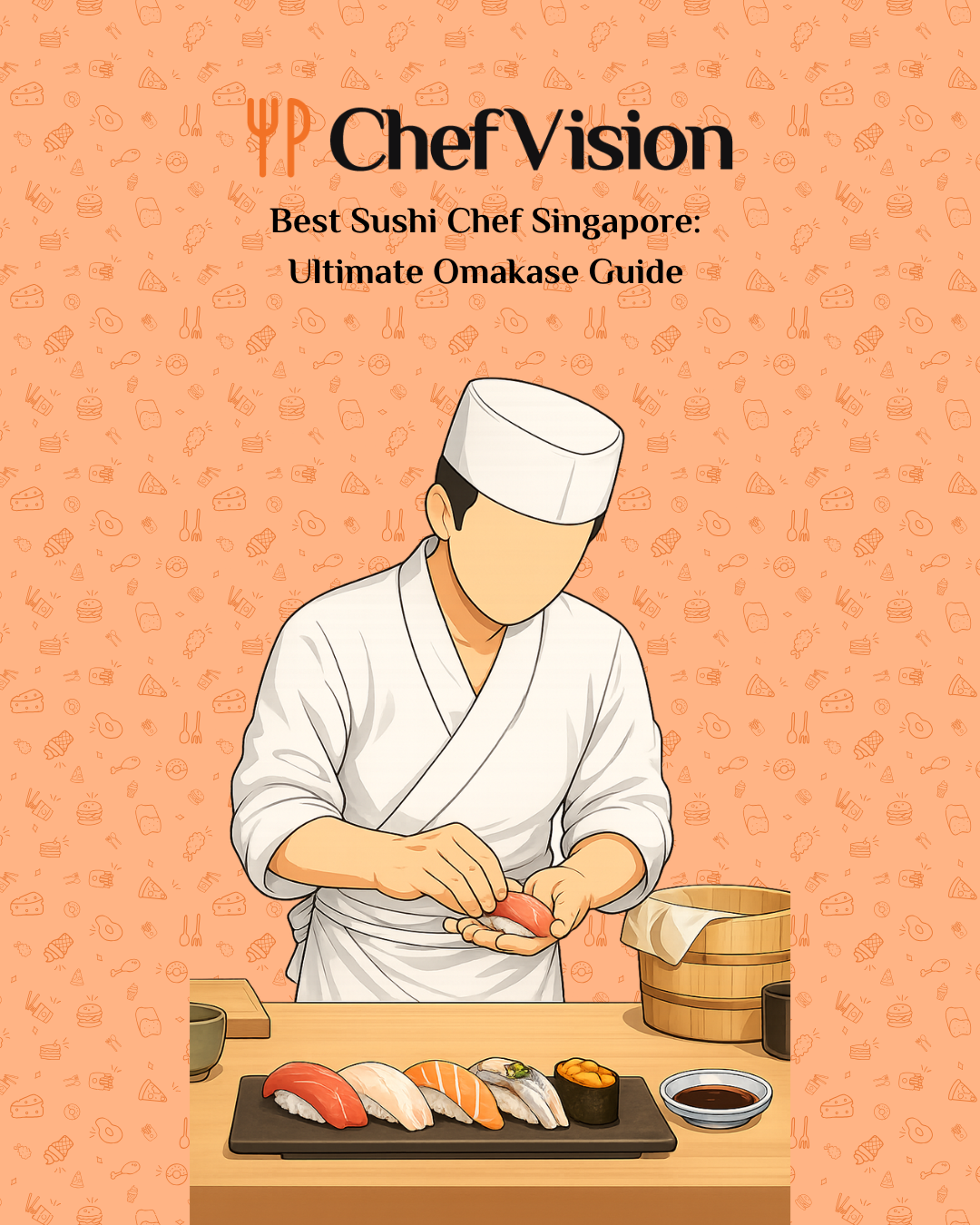
Best sushi chef Singapore: how to choose your next omakase
Finding the best sushi chef in Singapore depends on balancing their lineage, ingredient sourcing, and shari technique. Top-tier master chefs in Singapore typically offer intimate, counter-only omakase dining, flying seasonal seafood directly from Tokyo’s Toyosu Market up to four times weekly to ensure absolute peak freshness.
What defines a true master sushi chef in Singapore?
To appreciate why a meal at a premium counter costs several hundred dollars, you have to look at the person behind the long knife. A master sushi chef, or itamae, isn't just a cook. They are craftspeople who have spent decades refining a specialized skill set that balances temperature, timing, and chemistry.
Edomae Sushi Definition: Edomae sushi is a traditional Japanese style of preparation originating in the early 19th century in Edo (modern-day Tokyo), focusing on curing, marinating, and fermenting seasonal fish to enhance flavor and preserve quality, rather than simply serving it raw.
In Singapore’s competitive dining landscape, distinction comes down to specific training and supply chains.
The traditional shashin and shugyo (apprenticeship)
The path to becoming a head chef involves a rigorous apprenticeship system known as shugyo. For the first few years, an apprentice didn't even touch a fish. They clean the kitchen, scrub containers, and watch the seniors. Next comes to learning how to prepare the rice for a process that requires mastering water ratios, vinegar blending, and fanning techniques. Only after showing consistency in these tasks is the apprentice allowed to practice cutting fish and, eventually, pressing sushi for customers. When you sit at a counter in Singapore run by a Japanese expat master, you are paying for those ten to fifteen years of unpaid or low-paid discipline in Tokyo, Ginza, or Osaka.
Sourcing architecture: the Toyosu connection
A chef’s skill means nothing without access to premium ingredients. The top counters in Singapore do not rely on local commercial importers. They maintain direct relationships with personal buyers (nakamae) at Toyosu Market in Tokyo. These buyers bid on specific tuna lines or sea urchin auctions exclusively for the Singapore restaurant.
The logistics are brutal. Fish caught on a Tuesday morning in Japan is processed, packed in specialized ice boxes, driven to Narita or Haneda airport, flown to Changi, cleared through customs, and delivered to the restaurant kitchen by Wednesday afternoon. Master chefs often schedule their menus around these flight arrivals, adjusting the aging process of specific, white-fleshed fish (shiromi) to ensure optimal umami development by dinner service.
Top master sushi chefs currently guiding Singapore’s counters
The Singapore culinary landscape hosts an impressive concentration of Michelin-starred talent and quiet masters who eschew media attention. Choosing where to book depends on whether you prefer strict adherence to historical methods or calculate modern innovation.
The purists: traditional Edomae masters in the CBD
Within the Central Business District, several chefs maintain uncompromising standards that mirror Tokyo's top elite rooms. These spaces are minimalist, often featuring counters constructed from single slabs of ancient Hinoki cypress wood.
Chef Masaaki Sakashita at Sushi Sakashita focuses on structural purity. His rice is seasoned sharply with a blend of dark red vinegars (akazu), lending a distinct amber tint and a robust, slightly acidic profile designed to cut through the fat of wild bluefin tuna (hon-maguro). He minimizes conversation during the pressing sequence, encouraging diners to consume each piece within three seconds of placement to capture the exact temperature equilibrium between warm rice and cool fish.
Another notable purist is Chef Shinji Kanesaka’s team at Sushi Shinji, where the lineage connects directly to elite Ginza institutions. Here, the emphasis rests on subtle marination techniques. You will not find blowtorches or truffle oil. Instead, silver-skinned fish (Hikari-mono) like gizzard shad (kohada) undergo precise salting and vinegar-basking rituals that draw out deep, oceanic oils without overpowering the palate.
The innovators: modern interpretation and seasonal fusion
Conversely, a growing contingent of master chefs adapts classical training to international palates, introducing subtle cross-cultural elements. These experiences often appeal to younger gourmands who find traditional Edomae counters overly restrictive.
Chef Kenjiro ‘Hatch’ Hashida at Hashida Singapore represents this evolutionary bridge. While his knife skills are traditionally grounded, he incorporates unexpected seasonal markers and textures. A signature piece might feature a layer of rich ankimo (monkfish liver) piped beneath a slice of seasonal white fish, or cooked components that introduce smoke and charcoal notes rare in pure Tokyo formats. Hashida treats the meal as a narrative arc, blending performance art with rigid culinary discipline.
Comparing Singapore's premier sushi counters
To help navigate these high-end options, this table breaks down the core structural differences across the city's top-tier counters based on operational details collected over recent dining seasons.
Chef / Restaurant Lineage | Signature Style | Shari (Rice) Vinegar Base | Estimated Cost (SGD per person) |
Chef Masaaki Sakashita (Sushi Sakashita) / Ginza Elite | Strict Edomae, sharp temperature focus | Heavy Akazu (Red Vinegar blend) | $450 – $650 |
Chef Master Team (Sushi Shinji) / Kanesaka Lineage | Classical preservation, curated marination | Balanced Komezu (White) & Akazu | $350 – $600 |
Chef Kenjiro Hashida (Hashida Singapore) / Tokyo Family Legacy | Creative narrative, rich texture layering | Custom blended multi-vintage vinegar | $400 – $700 |
Chef Yoshio Sakuta (Sushi Sakuta) / High-end Hokkaido | Clean execution, caviar & premium additions | Light Komezu prominent blend | $500 – $800 |
The technical indicators of elite sushi execution
When evaluating your meal, look closely at the mechanics of the service. A master chef reveals their expertise not through high-end ingredients like caviar, but through thermodynamic control and physical ergonomics.
Shari temperature control and structural integrity
Rice (shari) makes up more than sixty percent of a piece of sushi. An elite chef monitors its temperature continuously throughout the night. It should be served at near body temperature, around 36°C to 37°C. If the rice is cold, the fat in the fish congeals on the tongue, masking the flavor. If it is too hot, it cooks the delicate underside of the raw seafood.
Key Industry Insight: According to data from Tokyo Culinary Logistics Research (2025), premium sushi counters experience up to a 15% waste factor in rice volume daily because master chefs discard shari batches that drop below the optimal 34°C threshold during extended service windows.
The structural tension of the rice ball requires immaculate finger pressure. When placed on the wooden board (geta), the piece should subtly sink under its own weight, indicating that air has been trapped between the individual grains. When picked up with chopsticks or fingers, it should hold together perfectly yet dissolve immediately upon entering the mouth.
Wajima lacquerware and counter ergonomics
The physical environment is deliberately engineered to enhance food. Top-tier establishments invest heavily in handmade Wajima lacquerware vessels and custom-angled serving blocks. The height of the counter relative to the chef's arms allows them to execute the honte-gaeshi (hand-flip pressing technique) smoothly without lifting their elbows, maintaining a calm, fluid visual rhythm that doesn't distract the diner.
Frequently asked questions about dining with a sushi chef in Singapore
Should I eat sushi with my hands or chopsticks at a high-end counter?
Using your fingers is generally preferred by master chefs. It allows you to pick up the sushi gently without breaking the delicate, airy structure of the warm shari. If you choose to use chopsticks, turn the piece sideways to grip both the fish and rice simultaneously to avoid dropping grains into the soy sauce dish.
Why do some chefs use red vinegar while others use white vinegar for rice?
Red vinegar (akazu), made from fermented sake lees, offers a deep, complex umami flavor that pairs well with rich, oily fish like fatty tuna (otoro) and mackerel. White rice vinegar (komezu) is cleaner and sharper, highlighting the clean, sweet profiles of white-fleshed fish, squid, and shellfish. Modern masters often switch between two distinct rice wooden tubs (hangiri) during a single meal to match the fish being served.
How early do I need to book a seat with a top Japanese chef in Singapore?
For premier counters with fewer than ten seats, reservations typically open one to three months in advance on the first day of the month. Elite spots often require a deposit or maintain waitlists driven primarily by regular local patrons who secure their next booking before leaving their current dinner.
Is it rude to ask the sushi chef for extra soy sauce or wasabi?
Yes, it can be interpreted as a subtle insult to the chef's seasoning balance. An authentic master applies the exact amount of freshly grated real wasabi (hon-wasabi) and brushes a cooked soy glaze (nikiri) onto the fish before placing it on your plate. Taste the piece first; if you genuinely prefer more heat or salt, request it politely for subsequent pieces.
What is the difference between Edomae style and Hokkaido style sushi?
Edomae style focuses heavily on technique-driven preservation methods like curing with sea kelp (kobujime), simmering, and soy marination, reflecting old Tokyo traditions. Hokkaido style emphasizes raw, pristine freshness and chilled serving profiles, highlighting sweet shellfish, sea urchin (uni), and crab's native to Japan’s northern waters.
The evolution of Singapore’s counterculture
Singapore's relationship with high-end Japanese dining has shifted from appreciation of novelty to deep, technical critique. Diners across the island no longer settle for generic luxury labels or imports; they understand the nuances of seasonal migrations off the coast of Japan and the subtle adjustments made to rice hydration during humid monsoon months.
When choosing your next counter experience, look past the social media visibility. Focus instead on the quiet details: the steady rhythm of the knife work, the precise temperature shift from rice to fish, and the calm focus of a master chef who has spent a lifetime perfecting a momentary bite.
Read more about: Private Dining Singapore: Restaurant-Quality Experience in Your Home