The Authentic Kaiseki Dinner Singapore Guide: Tradition, Structure, and Luxury At-Home Dining
An authentic kaiseki dinner in Singapore represents the pinnacle of Japanese culinary art, balancing seasonal ingredients, meticulous preparation, and refined hospitality. Originally a simple meal accompanying tea ceremonies, modern kaiseki has evolved into an elegant multi-course dining experience that harmonizes taste, texture, and aesthetic beauty across sequential, specialized culinary techniques.
To truly appreciate this culinary tradition, one must look beyond the exquisite plating. The journey of a kaiseki meal is a highly orchestrated performance where the chef communicates through flavor profiles, texture contrasts, and visual metaphors tied to the natural world. In Singapore's fast-paced culinary landscape, finding a space that honors this slow, deliberate art form transforms a simple evening into a memorable cultural experience.
What is Traditional Philosophy Behind a Kaiseki Meal?
The core philosophy of kaiseki centers on shun (using ingredients at their absolute peak of seasonal freshness) and ichigo ichie (treasuring the unrepeatable nature of a single moment). Every element, from the temperature of the broth to the specific ceramic dishware chosen, reflects a profound respect for nature and mindful hospitality.
Shun is the Japanese culinary concept of sourcing materials precisely when their natural flavor, texture, and nutritional value reach maximum vitality. This practice ensures the menu continuously shifts alongside the changing micro-seasons.
Ichigo Ichie is a philosophical concept translated literally as "one time, one meeting." This principle reminds both the master chef and the diner that a specific gathering, conversation, and flavor profile will never occur in the exact same way again.
Central to this ethos is omotenashi, a form of selfless hospitality where the host anticipates every need of the guest without ostentation. When sitting down for a kaiseki dinner in Singapore, this philosophy guides how dishes are paced. The sequence mimics the natural progression of seasons, shifting from light, refreshing tones to deep, rich, comforting flavors, creating an emotional arc over the course of the evening.
The Meticulous Structure of a Multi-Course Kaiseki Dinner
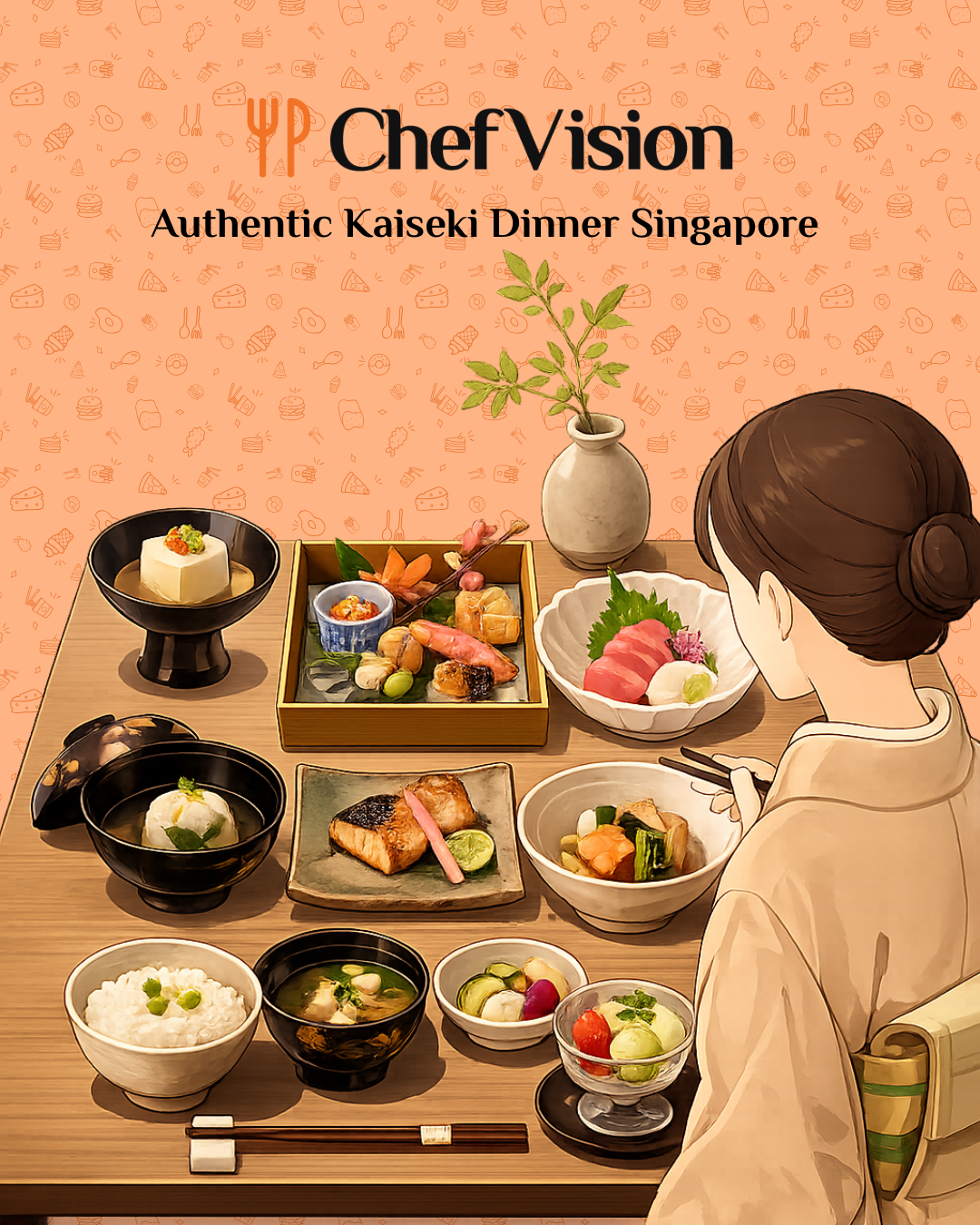
A traditional kaiseki dinner follows a strict, time-honored sequence designed to showcase diverse cooking techniques without overwhelming the palate. While individual menus vary based on seasonal availability, a classic progression transitions seamlessly through small appetizers, simmered dishes, grilled courses, and a clean, comforting rice finale.
1. Sakizuke (The Appetizer)
The meal begins with the sakizuke, an introductory course intended to awaken the palate. Chefs often pair a crisp, acidic element with an unexpected texture, such as chilled sesame tofu topped with sea urchin or lightly pickled seasonal greens. It acts as the opening greeting from the kitchen.
2. Hassun (The Seasonal Theme)
The hassun is the visual centerpiece of the entire experience. This course sets the seasonal theme, traditionally presented on a wooden platter in exactly eight inches square. It includes a variety of small, bite-sized delicacies from both land and sea, carefully styled with natural components like autumn leaves or cherry blossom twigs to establish the specific time of year.
3. Mukozuke (The Sashimi Course)
Next is the mukozuke, featuring seasonal sashimi. Rather than a standard assortment of raw fish, the slices are selected for their distinct textures and oil content. The focus sits entirely on knife precision, clean temperatures, and subtle accompaniments that highlight the natural clean sweetness of the fish.
4. Futamono or Wanmono (The Lidded Soup)
The appearance of a covered lacquer bowl marks the futamono or wanmono course. Removing the lid releases an aroma derived from a clean dashi broth made with premium kelp and bonito flakes. This course is considered the ultimate test of a chef's skills, as the broth must achieve a flawless balance of clarity and depth.
5. Yakimono (The Grilled Dish)
The yakimono introduces a distinct texture, often utilizing traditional binchotan charcoal. Master chefs use this dry heat to sear premium proteins like A5 Wagyu beef or line-caught black cod. The exterior gets a delicate crispness while locking in natural juices and rendering fats evenly.
6. Takiawase (The Simmered Course)
The takiawase brings a moment of balance after the richness of the grill. This course consists of seasonal vegetables, pieces of tofu, or seafood simmered gently. Crucially, each ingredient is cooked separately in its own seasoned broth before being assembled in the final bowl, ensuring that no individual component muddies the flavor of another.
7. Gohan, Tome-wan, and Ko no Mono (The Rice, Soup, and Pickles)
The savory portion concludes with a comforting trio: a clay pot rice dish (gohan), a comforting miso-based soup (tome-wan), and house-made fermented pickles (ko no mono). Serving rice at the end of the meal ensures that guests leave fully satisfied, serving as a grounding anchor before the sweet finale.
8. Mizumono (The Dessert Seasonal Finale)
The final course, mizumono, shifts focus toward clean, natural sweetness. Rather than heavy confections, this typically highlights imported Japanese fruits at their peak maturation, such as a slice of sweet Shizuoka musk melon, paired alongside a comforting cup of freshly whisked matcha tea.
Traditional Restaurant vs. Private Chef: Experiencing a Kaiseki Dinner in Singapore
While booking a traditional countertop seat at a high-end Singapore restaurant offers classic ambiance, hiring a private chef brings unparalleled personalization and intimacy. Private culinary experiences eliminate rigid seating timings, allow direct interaction with the master chef, and transform your residence into an exclusive, single-table venue.
Feature | High-End Restaurant | ChefVision Private Chef |
Privacy & Exclusivity | Shared dining room or restricted private rooms | Entirely exclusive to your personal home |
Menu Customization | Fixed seasonal menus with minor substitution flexibility | Fully bespoke menus built around your preferences |
Chef Interaction | Brief introductions over a busy commercial counter | Open, dedicated conversations throughout the night |
Pacing Control | Tied to restaurant seating slots and kitchen turnaround | Paced organically to match your conversation flow |
Ambiance | Formally curated commercial atmosphere | Relaxed, comfortable, intimate home environment |
Opting for an at-home kaiseki dinner changes how guests experience food. Without the distractions of a busy commercial venue, the focus returns to the core philosophy of hospitality. You can watch the detailed preparation steps up close, ask questions about specific fish selections, and enjoy the meal at your own pace.
How ChefVision Recreates an Authentic Kaiseki Experience at Home
ChefVision elevates residential entertaining by pairing Singapore’s elite private chefs with premium, air-flown seasonal ingredients to curate bespoke multi-course kaiseki dinners at home. Our culinary team manages everything from meticulous menu customization and specialized plate pairing to flawless table service and complete kitchen restoration, ensuring an uncompromised luxury experience.
Our operational process mirrors the standards found in top-tier establishments:
Direct Ingredient Sourcing: Our culinary network works directly with purveyors at Tokyo’s Toyosu Market, ensuring that seasonal seafood and produce arrive fresh for your scheduled event.
Curated Plate Selection: We don't just supply the food; our chefs bring selected ceramic, lacquer, and glass platters explicitly matched to the theme of your dinner.
Flawless Execution: From setup to final kitchen cleaning, the team handles every element silently behind the scenes, allowing you to remain completely present with your guests.
Frequently Asked Questions About Kaiseki Dining
Navigating your first premium multi-course Japanese dining experience often brings specific questions regarding etiquette, dietary restrictions, and logistics. Below are direct answers to the most common queries raised by diners planning a luxury kaiseki gathering in Singapore.
What is the difference between kaiseki and omakase?
Omakase translates to "I leave it up to you," where the chef chooses what to serve moment by moment based on daily ingredient availability, often focusing heavily on sushi. Kaiseki is a highly structured, multi-course meal that utilizes multiple traditional cooking techniques (simmering, grilling, steaming) to tell a cohesive story about a specific season.
How long does a typical multi-course kaiseki dinner last?
Because a traditional kaiseki menu spans between eight to eleven distinct courses paced deliberately to promote relaxation, a typical dinner lasts between two and a half to three hours. This pacing gives guests ample time to enjoy each presentation layer and socialize naturally.
Can a private kaiseki menu accommodate dietary restrictions or seafood allergies?
Yes. Unlike commercial restaurants with rigid configurations, a private chef experience allows for menu tailoring beforehand. Shellfish allergies, gluten sensitivities, or meat exclusions can be addressed during your initial consultation, creating alternative courses that maintain the structural progression of the meal.
How do private chefs source authentic seasonal ingredients in Singapore?
Ask before booking: a genuine kaiseki chef can name their specific import partner and confirm delivery frequency, since standing supplier relationships, not one-off orders, are what keep ingredients like sea bream or seasonal mushrooms tasting freshly caught rather than freighted.
What should guests wear for an intimate home-based kaiseki dinner?
While the home setting offers comfort, wearing smart-casual or elegant attire respects the dedication of the chef and honors the sense of occasion. Avoiding strong perfumes or heavy colognes is also recommended, as subtle aromas form a critical component of the early soup and sashimi courses.
Planning Your Custom Luxury Culinary Gathering
Bringing a premium dining experience into your home turns an ordinary evening into an exceptional memory. Whether you are celebrating a significant personal milestone or hosting an intimate gathering for close friends, the structure of a curated multi-course meal offers something far beyond a standard catering service.
By collaborating with our team, you gain access to skilled professionals who understand the subtle balances of Japanese culinary traditions. Let us handle the details while you sit back and enjoy a tailored culinary journey. Contact ChefVision today to look over our ChefVision curated menus or find out more about our dedicated private chef booking process to beginning planning your next private kaiseki dinner Singapore experience.
Read more about: Private Dining Singapore: Restaurant-Quality Experience in Your Home